Pages

Wednesday, September 26, 2012

You Talkin' To Me?

The new one week old* Samsung Galaxy ad is brilliant not just for giving Apple - and their fanboys - a well-deserved clip round the ear, but also for the acute attention to detail on casting and styling. Though the visual and behavioural differences between the Apple fanboys and the Samsung converts are slight, they are nonetheless powerful. These minute signals represent a deep understanding, on behalf of Samsung, for where their potential market lies.


While other technology brands are busy striving to become Apple, Samsung have looked for ways to beat them. And they found it in Apple's customers. In a post-Jobs world, there's a growing legion of Apple devotees who are getting sick of the taste of the Apple kool-aid. They've learnt the value of a great piece of mobile kit, and they're increasingly unconvinced that the iPhone is - or always will be - the only option for their needs.


Furthermore, and as is smartly yet subtly observed in the Samsung ad, Apple customers are fed up with wearing the metaphorical "I'm a Mac" t-shirt at all times. Back in the day (2009), being a "Mac" meant you had taste. You had a subscription to Monocle and Wired. And you wore your artisan aged denim with a Supreme shirt. Now it all feels a bit obvious and, worst of all, normal. As the Samsung ad highlights - even our parents are "Macs" now. Ouch.


Of course, Apple has its eyes on the largest market share possible and will hardly be trembling at the idea of losing its niche group of designer-type fanboys to Samsung. But being both loved and cool is a tricky game for brands, and it rests in the hands of the world's taste makers. If Samsung can lure that group over to their team, it doesn't mean they'll win the game right away but people will still turn out for the show.

*Thanks @planbstudio

Thursday, September 20, 2012

From A to B

"We live in tension between what we were and can think and these new things that we are unable to represent."

Yesterday I went to an astounding exhibition on contemporary cartographies at Barcelona's Caixa Forum. It was a beautifully curated selection of maps ranging from the physical to the emotional - each striving to translate and codify the human experience.


I love a mind map (or spider diagram). Though mine often resemble the crazed scratchings of a mad person, they nonetheless help me get my thoughts down and literally map out the issues - and possible solutions - at hand. From work to personal challenges, there's very little that a mind map doesn't tease out and bring structured thinking to. So it was inspiring to see how other people navigate both their real and metaphorical landscapes.

Zarina Hashmi's series, 'Cities I Called Home', are minimalist aerial views of various cities. Their raw, etched nature reflect her ingrained knowledge of each city, but also the tenacious nature of memory. How easy it is for the mind maps of one's environment to deteriorate out of context.


Perhaps the most impressive work in the exhibition were Mark Lombardi's 'narrative structures'. His sociograms document financial and political frauds and were, according to Wikipedia, his way of transcribing the thousands of index cards which constituted his research. Evidently unable to cope with such vast quantities of information, Lombardi hand-processed them into a format which reflected his thinking style, rather than simply the linear nature of the facts. At the risk of sounding horribly pretentious, Lombardi's "narrative structures" strongly reminded me of Sol LeWitt's wall drawings: The hand of the artist (or in LeWitt's case artists) creates a near-mechanical output that are at once rigourous and beautiful.


The exhibition was especially poignant for me as all my maps get updated with new cities, new journeys and new memories. But while the physical journey from London to Barclona has been linear, the breathing space this break has provided will loom large and bright on my emotional map for sometime to come.

Tuesday, September 11, 2012

Melts at body temperature

Do you remember when Haagen-Dazs was a thing? A sexy, naughty, erotic thing? In a recent 80’s movie marathon, it was exhilarating to see Haagen-Dazs product placement in both Wall Street and Fatal Attraction as a signal to conspicuous consumption and grown-up decadence. In the former, Daryl Hannah throws a tub in the microwave while making bedroom eyes at Charlie Sheen, who is busy with his MagiMix (yes, really. These were simpler times for us all). While in the latter, pre-crazy Glen Close is a “strange girl” to Micheal Douglas’ “naughty boy” over a pot of pralines and cream. The branding and advertising of Haagen-Dazs in the late 80’s and early 90’s was so risque, my pre-teen self was almost certain that it lay at the heart of how babies got made. Lunch may have been for wimps but Haagen-Dazs was for sexy-times.


So what the hell happened? Why did a brand who encouraged us to “lose control” end up losing its mojo? Since when did Haagen-Dazs get relegated to the freezer cabinets of corner shops and the clutches of single females who want to eat their feelings?

Firstly, I blame Nigella. I blame her for a variety of things, mainly for fauxgasming into her fridge in the middle of the night. But in this instance, I blame her for luring women back into dessert making with the promise of turning each and every one of us into a ‘domestic goddess’. Before she came along - and as Daryl Hannah’s character in Wall Street is testament to - all a woman had to do to snag a man was to backcomb her fringe, chuck some white silk sheets on the bed and crack open the Haagen-Dazs. No Cath Kidston pinnies and coo-ing over cupcakes for Daryl. The Haagen-Dazs advertising may have been provocative and alluring, but the subtext (or the reality for its target market of 28-35 year old couples) was that it was acceptable for a hostess to put a tub of ice cream on the dinner table and call it dessert.


Mostly, however, I blame Haagen-Dazs. They had everything going for them, even in the face of adversity and rising competition. They achieved what so many fattening or unhealthy food brands would kill for - turning their main criticism into its main selling point. Until 1997, BBH created memorable, award-winning campaigns that transcended the category by positioning ice-cream as a glamourous, indulgent treat that absolutely wasn’t for kids. Quadrupling sales in the process. And yet, since dropping BBH, Haagen-Dazs have slid slowly towards the unremarkable. Just a different packaging to Ben & Jerry’s or Green & Blacks.


In 1995 The Independent noted BBH’s leveraging of “post-aspirationals” - “Five years of recession and a complexifying market place have encouraged advertisers to appeal to consumers not so much on the increasingly intangible attraction of what they want to be, but rather on the more certain repulsion of what they definitely do not want to be”. Recession and a complex market place? Sounds familiar. If there was ever a moment to persuade people that they definitely do not want to be a bunch of post-Olympic, cash-strapped, homemade bunt cake-making, frozen yogurt eaters, this is it. Haagen-Dazs - we want you to bring sexy back. No spoons required.

Saturday, September 01, 2012

Bye bye from MB

So much bro love to my MB massive, and to the very wonderful and talented Nick Macdonald. xx

Thursday, August 30, 2012

Where I'm calling from

Change. It’s a constant. New things bubble up, people enter and exit your life, the seasons pass, you grow and age, the past becomes a foreign country. Some change is drifting, ambient even. Other change is more dramatic - throwing you towards new challenges and opportunities and testing you to your core. While daunting and unnerving at the time, big external change can provoke formative internal change. It acts as a mark in the philosophical sand separating where you were, and where you’re going next.


This time of year somehow holds particular resonance for change. The low, late Summer sun, the dwindling evenings, and the smell of trees preparing for their Autumnal transition, all provoke strong sensory memories of a new school year, stiff shirts, crisp notebooks and freshly sharpened pencils. With transformation heavy in the air, it feels like the perfect moment to plan for change and draw that line between the now and the next.

Tomorrow is my last day Moving Brands. It’s a hard thing to write about, both emotionally and conceptually because I feel embedded deep into the warm core of this company, and extricating myself seems at once liberating and overwhelmingly terrifying. But if I’ve learnt anything in my four years within their walls, it's that change - in all its forms - can be embraced and leveraged into beautiful outcomes. MB’s founders, Ben, Jim and Guy, placed their ambition for - and belief in - the power of change at the heart of their business. It took them from outer Mongolia for the world’s first live satellite broadcast to the boardrooms of some of the world’s leading companies. It helped them develop their offer from merely animating logos to transforming businesses through creativity. And it enabled them to grow from a few dudes on the third floor of an empty building in Shoreditch, to a tight-knit global presence of expert, multidisciplinary teams. They took the lonely position of staring the unknown in the face, and came out ahead - the pioneers.

And they nurtured this in me. Instead of pinning me down to tried and trusted ways of doing things, they allowed me to explore and experiment. Their confidence in me enabled me to develop a personal interpretation of “creativity for a moving world” through my own work, and through inspiring, incredible collaborations with graphic designers, filmmakers, animators, UX/UI designers, programmers, copywriters and project leads. And as I honed an ability to nurture change within brands, I too was challenged, tested and fundamentally changed into a strong, focused strategist.


Moving Brands have made me who I am today and I couldn’t be prouder to have been a part of such an innovative and awe-inspiring organisation. Ben, Jim, Guy, Mat, Darren and everyone I've had the honour of working alongside - it’s been wonderful.

Tuesday, July 24, 2012

Fifty shades of blonde

What is it about blondes? Are they really having that much more fun? Are they really that much dirtier and that much dumber? Or is it all just decade upon decade of brand reinforcement on the part of celebrities, hair care companies and the aryan master race?


If the now infamous film from Terry Richardson is anything to go by, blonde still acts as a kitemark for sexuality, frivolity and all round good times. It’s a defining feature that tends to be found first on a list of adjectives when describing women with blonde hair. Just the merest flick of a golden tress instantly references goddesses from Venus to Gaga, whilst simultaneously calling to memory every quip and joke ever aimed at the fair haired of the fairer sex.


In September 2011 I started on a spiritual, psychological and experimental hair journey from brunette to blonde. Little did I realise how dramatic the effect on perception would be - both mine and others - and how much I had to learn about the brand of blonde. For a tribe known for its dumbness, there’s a huge amount of complexity beneath the surface.

 Sarah Jessica Parker has always maintained that New York City was the fifth character in Sex and the City. And, in Legally Blonde, Elle’s hair was as much a character as any of the film’s stars. To provide subtle cues for Elle’s state of mind and mood, Reese Witherspoon’s hair was reportedly dyed differing shades - a bright yellow blonde for when she’s in love, or an ash blonde for when she’s struggling professionally. Raymond Chandler even went so far as to formally classify the varying ‘types’ of blondes in his literature; “small cute”, “big statuesque”, “soft and willing”, “small perky”, “pale pale with anemia”, “gorgeous showpiece”, and “the blonde who gives you the up-from-under look and smells lovely and shimmers and hangs on your arm and is always very, very tired when you take her home”.


As a chick in two largely male dominated industries - design and tech - I’m not above resorting to fighting dirty with my lady powers if the need arises. I firmly believe that, if people start off thinking you’re stupid, you can only prove them wrong. My blonde hair is now an integral part of my armoury - pretty much guaranteeing that I’m starting conversations from a baseline of zero, with plenty of open space to claim. For women, it’s been said that you can never be too thin, too rich or too blonde - the ultimate triple threat that makes men want them, and other women want to kill them. Even Marilyn Monroe attributed her success to having “blonde hair and a body men liked”. Of course, I’m leaning on huge and demeaning stereotypes for both men and women here, but the more blonde I go the more evidence to support the theory that I’m gathering.


And that’s the point - it’s the stereotype that’s both so interesting and so powerful. As a brand - and by that I mean a recognisable image that represents certain meanings and values - blonde is more or less universally recognised and understood. As a user (hell, let’s take the analogy and run with it), the statements one can make with it are clear and unambiguous. Try as they might, brunettes and redheads have never achieved such refined messaging, or such cut-through in the market.


The novelist Margaret Atwood observed that, "Blondes are like white mice...They wouldn’t last long in nature. They’re too conspicuous". And with this in mind, my research remains ongoing. In becoming one of them, I'm able to observe their conspicuousness up close while examining the impact of being perceived as dumb, dirty and a fully paid up member of the Too Much Fun club. While blondes may not last long in nature, however, it seems they're doing just fine in the urban jungle of our modern metropolises where sex, success and the mighty brand of blonde sell more than just shampoo. This isn't dumbing down, it's merely blonding up and they're gonna have the last laugh. And not just because they took a while longer to get the joke.

Thanks to JW - a natural blonde - for her collaboration and input. x

Monday, July 16, 2012

Model behaviour


Service is a great barometer for our time. Through economic downturns, technological upturns and corporate u-turns, the changing approach to customer service can be read like a newspaper. I wrote last week on the Moving Brands blog about O2's successful little foray into Twitter-based crisis management, which you can read here. But it was a recent trip to Westfield Stratford - all dolled up for the Olympics - that attuned me to another shift in how brands are are using customer service to cope in today's climate.

"Models protect and project the image of the brand through personal style, providing customer service and maintaining presentation standards" - so runs the job description for sales assistants, known as 'models', at Gilly Hicks. This purveyor of beachwear, 'cute bras' and 'down undies' is the "cheeky", faux Australian cousin of Abercrombie & Fitch. Like A&F and its other (probably backward and almost certainly unsafe around small animals) cousin Hollister, GH caters to buff teens roaming free with their parents' credit cards. Like all stores in the A&F chain, they appeal to their impressionable customers through 00 sizes and stores that are loud, dark and thick with the richly perfumed undertones of consensual rape. 


When A&F opened in the UK in 2007, it drew a line in the sand for service design. Harp on all you like over how there was something distinctly 'not cricket' about they way they swanned into Mayfair, stripped to their smalls and started a roaring trade that sex-ed up a once dingy end of Burlington Arcade. Nevertheless, it's impossible to deny that the all-American customer service that came with it was in stark contrast to the stiff pleasantries of Saville Row. It marked a new era for British retail - as people fled online, great customer experiences were the only thing to keep them in-store. Following A&F's lead, many UK retailers woke up to the value of a more touchy-feely sales experience.


In 2012 at Westfield Stratford, however, Gilly Hicks appears to be doing a weak doggie paddle in the swirling tides of socially-driven commerce. I was greeted by a hungry-looking tween, muttering something about 'welcome....beach......cute...something something'. At check out (research, research!) I was handed my receipt and told in a bored monotone "Don't forget to follow Gilly Hicks on Twitter for all the cutest bras and cheekiest tanks.". I've had dental work sold to me with more excitement.


Forging great relationships with customers through social platforms is key for retail brands moving forward. As Mercedes-Benz CEO Steve Cannon said in a recent Fast Company article, "[youth] perception is going to drive perception of the brand... In order to win, you have to know who they are. That means digital, social, and all the things we are doing". And, for the young audience Gilly Hicks is looking to attract, bridging that gap between online and in-store is critical. Only through on-brand  customer service and socially-driven messaging can this happen and, right now, their 'models' are seemingly too busy ignoring hunger pangs to start a meaningful conversation for the brand that can continue online. 

Wednesday, June 27, 2012

Brand Bedales

It’s not always with the clearest vision that one can look analytically at the formative factors of your lifestyle choices - the culture, brands and rituals that act as the ‘nurture’ overlay to one’s ‘nature’. But having recently watched the final installment of Grayson Perry’s ‘In the best possible taste’, and my ten year reunion occurring this Saturday, I feel enough time has slipped by to look at Bedales.

Most haven’t heard of Bedales School - why would they? It’s just a small, secluded boarding school in the Hampshire countryside. But those that have are often in no doubt of its reputation. From nude mixed bathing in the 1930’s, to underage, drunken threesomes just last year, Bedales has always represented the rebellious underbelly of public schools. A key theme in Grayson’s analysis of the British upper classes was “appropriateness” - something Bedalians (and more importantly Bedalian parents) flaunted their derision of with aplomb. While I remember sitting through many a school assembly being ordered never to consider ourselves “privileged”, I would argue with hindsight that ‘inappropriate privilege’ was the driving force behind everything Bedales did and said.


Bedales attracted two disparate ‘tribes’. In one corner were the deviant aristos - the infamous ‘bad seeds’ unlikely ever to be writ large on their sprawling family trees or immortalised in oil and hung on an ancestral mahogany stairwell. To them, Bedales stood at the furthest end of the shabby chic continuum as a way to reject their aristocratic identity without any of the tiresome day-to-day parenting encouraged by the state education system. Bedales represents the ultimate ‘fuck you’ to the family name by spending the last of the inheritance on preposterous school fees so Tariq could bake artisan bread, roll incredible spliffs and fail all his A levels.


In the other corner were the princes and princesses of the Rock and Roll establishment. The insanely good looking offspring of The Rolling Stones, The Who, The Pogues, The Clash, or those with suggestive surnames like Paxman, Dahl and Day-Lewis. This lot came at it from a different angle - they may have had loads of money but it was all new money - the very worst kind of money. To Rock and Roll parents, Bedales was an easy and fast way to buy into a very specific type of wealthy bohemia. Grayson Perry describes this lifestyle as being “like a play set in the 20s, on lovely misty lawns with decorated swans” and, with its sprawling grounds and moss-covered buildings Bedales offered up just that. 


As a brand, Bedales did a fantastic job of appealing hugely to their two target audiences. It had everything a luxury lifestyle brand requires - a compelling heritage, a distinct reputation, an ownable aesthetic and, most importantly, a price tag which made it both aspirational and exclusive. As students, we were the brand's greatest assets and the expectation to fall in line with its values was high. And what great ambassadors we were - directing plays, digging ponds, and indulging in narcotics, eating disorders, alcohol and sex like they were chocolate buttons. Hogwarts on meth.


There’s a line in Absolutely Fabulous where a furious Eddy chastises her daughter for being studious and “normal” with the line “When I think of the schools I sent you to darling, I mean BEDALES for God’s sake!”. The comment implies that being a Bedalian makes you a certain type of person and, to a certain extent both negatively and positively, it does. As a teenager it’s comforting to be totally “on-brand” and “on-message”. After ten years, however, I like to think it’s just a small part of who I am - a streak of rebellious, inappropriate ‘nurture’ running through layer upon layer of nature.

Wednesday, June 13, 2012

Desert Island Digital: Ariane Schick

On this week's Desert Island Digital my castaway is Ariane Schick. Ariane is currently a Masters student at the Royal Academy in London, having studied previously at L'Ecole des Beaux Arts in Paris. She works in a range of mediums - always with a beautifully evocative sense of colour and space. Ariane is bi-lingual, an adventurous traveller, a wonderful crepe maker and one of my oldest friends.


Here's her choices for life on the island.

One tweet upon arrival on the island:

I would tweet a picture of the Twitter bird, whose real life doppleganger has been living undiscovered on the island.


One app:

Shazam. So I could Shazam island sounds in the hope that one day it might recognise a mix between a bird song, the trees rustling and coconuts falling as a song.


One #ff (Follow Forever) on Twitter:

Does Tuttle tweet ?


One album on Spotify:

Wagners Ring Cycle because it's long.  


One photo:

I don't have it yet but a picture of a very scary animal so I can flash the picture when in danger, until my phone dies that is.  


One YouTube video:


One digital luxury:

I'm not sure if this is really digital or a luxury but a loo roll dispenser that doubles as iPod speakers ? 

Tuesday, June 05, 2012

Dark with something more than night

Cool little collection of films here to indulge in over the bank holiday, sent to me by Giles Phelps last week. Giles is a one time resident of LA who, back in the day, spent many a hour with my Father - tearing up a city where the night smells of lust and depression, the wind sounds like a Raymond Chandler line, and 'on location' never counts...


Sent in response to a new film made my dear friend, the ferociously talented Rex, for Design Studio/Nokia.

Wednesday, May 30, 2012

Desert Island Digital - Whurley


On this week's Desert Island Digital my castaway is Whurley. Whurley is the co-founder and GM of Chaotic Moon, an Austin-based mobile application studio. Chaotic Moon helped to create the world's first tablet-only publication The Daily, and recently devised the Board of Awesomeness - a motorized longboard custom rigged with a Microsoft Xbox 360 Kinect device.   


Here's his choices for life on the island.

One tweet upon arrival on the island:
@whurley

#lost
(I think it would be funny to tweet you were lost from an island like lost because...well trust me it's funny)

One app:

Age of Booty. 'Cause it's awesome amounts of endless fun created by all of my coworkers at Chaotic Moon and it would remind me of them and bring back great memories on rainy days.


One #ff (Follow Forever) on Twitter:


@dalailama For the obvious inspiration and because his mindset would be very good to have if you were going to be alone for an extended period of time. 

One album on Spotify:


Spotiwhat? 
Like I said Spotiwhat? ;) 

One photo:

Any photo of my son
Cause he's the most awesome and if I could only have one photo it would be of him. 


One YouTube video:


One digital luxury:


My iPad with Cellular Service, LTE please ;) 
Cause then being on the island would pretty much be exactly like being at home :) 

Monday, May 28, 2012

Nothing Specific

So here it is. The inevitable Moonrise Kingdom post. Made possible by the fact that I'm white, work in the creative industry and live in Hipster Yuppie central. Plus the new episode of Girls isn't yet available on my illegal download site of choice.

People seem to have a bit of a Marmite relationship with Wes Anderson. Some loathe his work, finding his style sickeningly twee, his characters devoid of meaning and interest, and his plots... non-existent. Others revel in the vagueness he casts in the dusty pastel light of imagined nostalgia. Love it or hate it, his recurring theme of disconnected, flawed adults encroaching on the apparent innocence of youth is unparalleled. His loyal ensemble cast defined so much by their possessions and hobbies, they can say everything without the need to say anything at all.


While Anderson's previous films (Rushmore, Tenenbaums, Darjeeling) focus on grown-ups trapped by the expectations of their childhood, Moonrise Kingdom brings the emphasis onto the children. His pre-teen protagonists long to be fugitive from the suffocating emotional tension at home before the real damage - the damage their parents and guardians so fearfully obsess over - truly sets in.

As a viewer, Moonrise Kingdom initially comes across as an escapist fantasy. Reading the tweets surrounding its opening last week, many people were leaving the film feeling blissfully upbeat. And, with all the whimsical detailing, ironic one-liners and small children talking the big talk, it certainly has all the attributes of Bugsy Malone as interpreted by Jack Spade and Anthropologie. Personally, I was nevertheless left with a haunting feeling - a bitter taste in my mouth that suggested something was amiss. Perhaps, the innocence of the kids served only as a distraction to what was really being said about the empty selfishness of adulthood. Perhaps the joy I and my fellow Dalstonite audience felt was simply blinding denial. As Anderson himself said in a recent interview with WSJ, "I don't really know what I want people to take away from my movies. Nothing specific". Nothing specific - the beating heart of a hipster yuppie lifestyle.


Sunday, May 20, 2012

Roll up, roll up

Next week, as part of the Clerkenwell Design Week, I'll be on the panel for Design Crimes - a session of strong opinion and forthright debate around crimes in performance, function, form or simply interactive frustration. Previous selections have included TV remotes, DFS sofas and the UGG boot.


The theme for Wednesday's event is "Revival", and we've been asked to select those designs from the past which we believe would have been better left where they belonged: in the past.

More details here and Clerkenwell Design Week guide here. Get in.

Wednesday, May 16, 2012

Desert Island Digital: Steve Price


On this week's Desert Island Digital my castaway is Steve Price. Steve is a Creative Director, Meat Club President, Dad, martini drinker and the first real-life friend I ever made on Twitter. Rumour has it, he has his own set of monogrammed towels at Shoreditch House. 


Here's his choices for life on the island.

One tweet upon arrival on the island:
@planbstudio

Fuck desks. Here's my new studio. #Love&Support


One app:

Hailo. is awesome cab app but not sure it would work on a desert island. So probably Instagram - at least I can keep people posted with which coconut I am wearing.


One #ff (Follow Forever) on Twitter:


@dalailama to help me gather my thoughts everyday


One album on Spotify:


Pearl Jam, Twenty


One YouTube video:


One photo:


Me and my son. So happy, so excited. 


One digital luxury:


Laptop (and wifi)

Tuesday, May 15, 2012

What's in a name?


Camilla's Store is the name of this blog. Camilla Grey is my name. The former sounds like a Texan junk shop. The latter sounds like a Pantone chip. Both sound made up. When I started Camilla's Store, the need for social media usernames was minimal. Plus, I was young, naive and, like many at that time, half believed this whole 'Internet' thing would never really take off.

Fast forward five years, dozens of online profiles, hundreds of blog posts and thousands of tweets later and I have a problem. A geeky white girl problem, but a problem none the less. I have become the victim of my own good branding. Real people think my real name is Camilla Store.


At first I laughed it off, but then I put on my serious Brand Strategist hat and asked myself what I would advise a client in a similar situation. And my response would be to change the name that no one knows. As the guys at Wolff Olins say, "Your brand is whatever Google says it is". Combine that with what I say, which is "Your brand is whatever people on social media say it is" and you've got the answer. I'm going to have to change my real name via deed poll.


Who cares about the legacy, heritage and family ties that lie behind Grey? So what if, as an only child, it falls to me to continue the legacy of Grey's into the next generation? The people of Instagram and Twitter want fresh links and hot #matchymatchy's, not some sob story about my Ukranian ancestors slumming it in East London before it got cool. And, as a Strategist, I firmly believe in giving the brawling masses what they want.   

If you insist on living by the sword, you have to be ready to die by the sword. And anyway, if I had to choose between Google and the Passport Office, I'd go for the one least likely to invent Google+ every time. 

Thursday, May 10, 2012

Kid, you'll move mountains

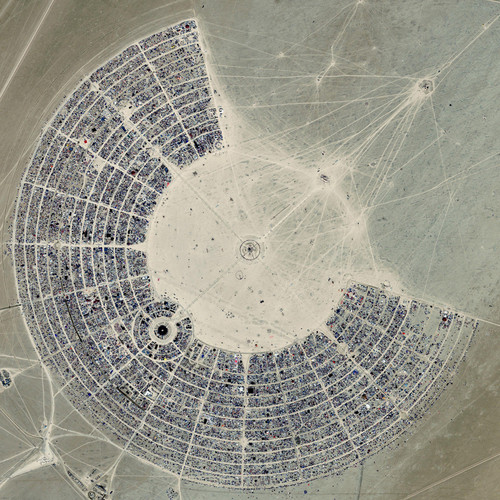
Tales from a new friend about the desert utopia that is the Burning Man community have got me dreaming of bleached out sands, lost wild nights, and no tan marks! 


Wednesday, May 02, 2012

Desert Island Digital: Panja Gobel


On this week's Desert Island Digital my castaway is Panja Gobel. Panja is a designer of immersive environments and digital experiences, as well as a pretty cool cat. What she doesn't know about the interplay between people and technology isn't worth knowing. Just last month she was on the jury for the D&AD Awards in the Digital Design category.


Here's her choices for life on the island.


One tweet upon arrival on the island:
@panjapop

Yo! #unplug 


One app:

Draw Something - I love the way an app can have such bad UX and still gets me hooked just on it's concept. No, I don't love it - I'm suffering from UX huffing and puffing syndrome. Recently they integrated a share button, that spoils battles by posting them prematurely on Facebook. Brilliant, who thought of that? It should really be put into the replay section of a past battle. So listen up and sort it out. I also would like a gallery, so I don't have to painstakingly screen grab it myself and generally it would be good to have some sort of scoring table. Then make everything look a little nicer and we are there. Despite these extreme UX issues I am addicted. Normally I try to have at least 10 battles going parallel so I always have at least 2 a day. Most days I just wish my finger was more pointed. 


One #ff (Follow Forever) on Twitter:

@lukid - always a welcome and wayward distraction to my life


One album on Spotify:

Pata Piya or Electric Africa are just brilliant. Perfect Desert island music - cheerful music to dance to with coconut bras and banana leave skirts or just naked.


One YouTube video:

David Weiss of Fischli & Weiss died a few days ago. They were the best and most influential art duo ever. Personally I thought they were immortal. I also would be making a lot of stuff like that on the island.


One photo:

This is the kind of stuff my daughter builds around the house for us. These little worlds always cheer me up. Apparently this one is a series of cakes.


One digital luxury:

Asimo - I just love him and want him to come with me anywhere I go. Wonder how he would cope on an island… not really sure wether he could swim or whether the sand would damage his mechanism. Obviously Asimo, with his Honda genes also loves Fischli & Weiss, which will help.

Monday, April 30, 2012

Bridging the gap

Just for kicks I sometimes enjoy messing with the Netflix algorithm by watching movies way out of my usual 'taste preferences'. So with this in mind and to cheer myself up a bit, I watched 'The Bridge' - a moving documentary about the people who take their lives by jumping off the Golden Gate Bridge in San Francisco.

I've driven across the Golden Gate several times now - more often than not in The Great Red Shark while listening to the soundtrack from The O.C. But even then, the bridge holds a strange sense of foreboding within its straining ironwork and startling russet tones. The inclement weather patterns, for which SF is known, seem to begin and end at the bridge. The mists roll in and out, sometimes gleaming brilliantly in the Californian sun, other times shrouding the entire structure in cloud. On the gloomy days, with the rain and the wind and the shadow of Alcatraz in the near distance, it really couldn't be further from the picture postcard image of majestic structural engineering.


'The Bridge' includes footage of real people jumping, shot over several months by the film's makers. Apparently, on average, two people take their lives at the bridge every 15 days. It's easy, it's dramatic and it's high enough to be a sure thing. But the most emotive element in the film were the interviews with the jumpers' friends and family. Just like the ambiguous nature of the bridge itself, they veered between understanding the actions of their loved ones, while struggling to comprehend how anyone could fall so deeply into despair.


One of the parents interviewed wondered if her son chose the bridge because he "wanted one last chance to fly". The footage of him - Gene - pacing next to the barrier for hours before finally leaping triumphantly onto the rail and throwing his arms up in a swan dive takes your breath away. Just as the bridge is a testament to man overcoming nature - connecting two sides of San Francisco bay - so these fatal acts depict an individual's conquering of his or her own destiny.

You can check out the trailer out here.

And as for me, don't worry I'm back to Season 3 of The Rachel Zoe project. All good.

Wednesday, April 25, 2012

Desert Island Digital: Mills aka CHIEF WONKA™

On this week's Desert Island Digital my castaway is the self-proclaimed King of Succailure, Twitter flaneur, Keynote master extraordinaire and co-founder of ustwo, Mills.


Here's his choices for life on the island.


One tweet upon arrival on the island:
@millustwo
Success Island™ - CHECK


One app:
Twitter for iPhone - laying on the sun bed, beer in hand and iPhone in other = Heaven. I need to touch the hearts and minds of the industry I love.


One #ff (Follow Forever) on Twitter:
@Mr_Bingo  - unquestionably the biggest fool I know but unquestionably the funniest.


One album on Spotify:
The year was 1999, the first time I heard their virginal voices, they touched me in a way I never forget. If you could bottle love, these guys would be the milkmen. 
Westlife by Westlife - it's now a cult classic.


One YouTube video:
I have no idea if this is real, or if it is made by some student, but what I do know is that it's utter genius and should be the benchmark for all adverts. 


One photo:
My studio - there is no place like home


One digital luxury:
My Kindle -  so far I've had my Kindle for a year and have yet to get past page 78 of Onward by Howard Schultz, even though I bought it a year ago. The Kindle is genius and I love the feel of it in the hand, the simple page turn, the fact I can have thousands of brain foods in it. Having it with me on the island means I may actually find time to use it. 

Tuesday, April 24, 2012

Love it when you go bump bump bump

It's not often that a new technology works its way seamlessly into your life. There's almost always that love-hate tussle throughout the learning and adoption curve stages - that phase where you can see it's kind of a big deal but it takes concerted effort to remember to use it. *Looks accusingly at Path*. Indeed, many of the tech clients I've worked with have referred to that hallowed position of "owning" a part of the brain - the type of ownership that sees brand names become verbs; "Google it", "Wikipedia it", "Netflix it".


So I've been pleasantly surprised to welcome the Bump photo transfer app into my life and given that it doesn't require you to tweet about it or form communities around it, it seemed only fair to give the app a little loving shout out on here. For those of you who follow my ramblings on the @movingbrands Twitter, you'll know that my colleagues and I fell instantly, and hard, for the neat interface of hitting the space bar with your iPhone to transfer photos to your desktop. But initial thrill over, I've returned to it again and again.


If I have the choice to email a photo to myself, wait for iCloud to sync or simply "bump" it - the answer's in the lexicon.

(Also finally found an excuse to try out the new Spotify embed option. #HandClaspOfChampions)