I try to be a good person. I look for the best in people, I see the bright side, I care how others feel and, if Stoke Newington wasn’t overrun with yuppies, I would totally help old ladies cross the street. But lately I’ve been getting angry with people.
Not random strangers but the hairdresser who kept me waiting for 30 minutes without acknowledging or apologising; the coffee shop owner who charged me £10.70 for two coffees, a tiny piece of cake, an unacceptably long wait and a huge amount of attitude; the sales assistant at M.A.C who pushed me out of her way, and the other sales assistant at Liberty’s who pushed my Mum out of her way; and the independent furniture maker who was so unpleasant when it came to organising delivery that I cancelled the order and took my 3-month’s worth of saving elsewhere.

Believe me, I’ve really challenged myself to be sure that this isn’t just First World Problems. Certainly I have high standards and expect value for money, but I was raised on the strategy of “hard on the issue, soft on the relationship” because we’re all just people at the end of the day. And yet, I am increasingly shocked at the appalling levels of customer service from both independent and chain retailers - businesses which make up the languishing British highstreet and which we're trying to preserve.
When shops are fighting against online retailers to increase footfall and boost spend in-store, it seems odd that so few are leveraging the one thing they can offer over a website - real, friendly, helpful, personal interaction.
In fact, emotion and relationships are so important in the so-called ‘path to purchase’, that many of the world’s greatest brains are currently employed in making computers behave more like us.
I fear, however, that I have become so used to things being instant and personalised and “Hi Camilla, because you bought that, you might like this!” that I’ve forgotten how long things take to do and make, or how busy and crowded it can be in the West End.
Not only have I forgotten, but the purveyors of haircuts, coffee, clothes and furniture have too. Is it really that hard to apologise for keeping someone waiting? Or ask politely for someone to please move aside? Won't we, as people, generally have a better time if we're all lovely and helpful to one another?
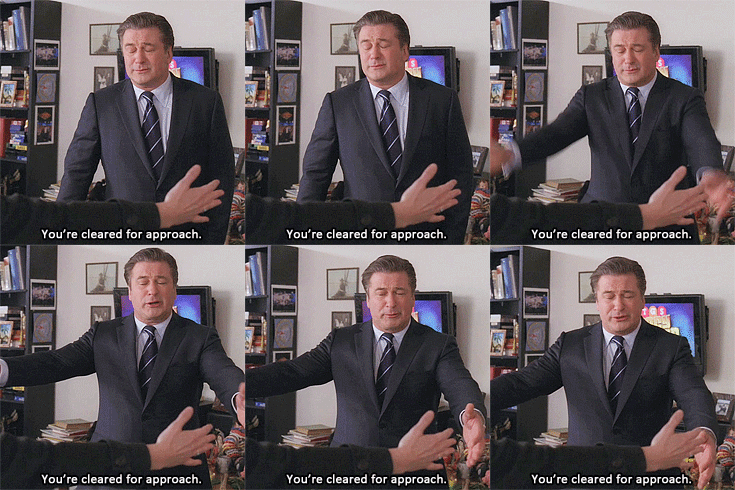
I adore technology and I think about how brands can use digital tools and platforms every day in my work, but I’d hate to see it lead to a world where I yell in public about a piece of cake. I want technology to accentuate our human-ness, to make us take pride in it and treasure it. Let machines be mean - they’ll be great at it.
Snaps to the wonderfully friendly people of The Albion Pub, Superdrug in Angel, and Barclays telephone banking for bucking the trend.
Showing posts with label service. Show all posts
Wednesday, October 30, 2013
Saturday, December 29, 2012
Weird customer experiences
Question: What is the line between awesome, personalised customer service and creepy, invasive behaviour from a brand?
Ok, so here’s what happened. A few days ago I stopped by the Rag + Bone store. Whilst there I tried on about five items and bought one. Claudine (name changed), the sales assistant, was friendly and helpful. Absolutely nothing about her approach or our interaction was out of the ordinary. At the till, she asked for my email address and - assuming I would be subscribed to the R+B newsletter - I gave it to her. Happy days.
Yesterday I got an email from Claudine. This is what it said,
Hi Camilla, I hope you had a lovely Christmas, I remember you bought the skirt, I was just wondering if you had a chance to wear it already? Have you got any plan for New year? If you need anything else, let me know, I'll be happy to serve you again. If I don't see you before, Happy New Year. xx
Now... is that weird? I really can’t decide. In my previous post I was strongly lamenting the lack of a tailored, personal, engaged conversation with a brand. Yet now I’ve been invited into one I feel a bit... off about it. Is this how Rag + Bone care for their customers? In which case, that’s a lot of effort for someone who bought a single sale item. Or has our Claudine accessed my personal details in order to make friends or even hit on me? I can’t work it out.
Either way, it comes across as customer service design and brand guidelines gone awry - like a collquialism put through Google Translate. Rag + Bone, if you’re reading, you might want to get a handle on this so I, and perhaps others, can enjoy their new clothes without the shadow of poor grammar and strange undertones. Meantime, I think I'll stick to sale shopping online!
Monday, July 16, 2012
Model behaviour
Service is a great barometer for our time. Through economic downturns, technological upturns and corporate u-turns, the changing approach to customer service can be read like a newspaper. I wrote last week on the Moving Brands blog about O2's successful little foray into Twitter-based crisis management, which you can read here. But it was a recent trip to Westfield Stratford - all dolled up for the Olympics - that attuned me to another shift in how brands are are using customer service to cope in today's climate.
"Models protect and project the image of the brand through personal style, providing customer service and maintaining presentation standards" - so runs the job description for sales assistants, known as 'models', at Gilly Hicks. This purveyor of beachwear, 'cute bras' and 'down undies' is the "cheeky", faux Australian cousin of Abercrombie & Fitch. Like A&F and its other (probably backward and almost certainly unsafe around small animals) cousin Hollister, GH caters to buff teens roaming free with their parents' credit cards. Like all stores in the A&F chain, they appeal to their impressionable customers through 00 sizes and stores that are loud, dark and thick with the richly perfumed undertones of consensual rape.
When A&F opened in the UK in 2007, it drew a line in the sand for service design. Harp on all you like over how there was something distinctly 'not cricket' about they way they swanned into Mayfair, stripped to their smalls and started a roaring trade that sex-ed up a once dingy end of Burlington Arcade. Nevertheless, it's impossible to deny that the all-American customer service that came with it was in stark contrast to the stiff pleasantries of Saville Row. It marked a new era for British retail - as people fled online, great customer experiences were the only thing to keep them in-store. Following A&F's lead, many UK retailers woke up to the value of a more touchy-feely sales experience.
In 2012 at Westfield Stratford, however, Gilly Hicks appears to be doing a weak doggie paddle in the swirling tides of socially-driven commerce. I was greeted by a hungry-looking tween, muttering something about 'welcome....beach......cute...something something'. At check out (research, research!) I was handed my receipt and told in a bored monotone "Don't forget to follow Gilly Hicks on Twitter for all the cutest bras and cheekiest tanks.". I've had dental work sold to me with more excitement.
literally cringed with embarrassment when the girl at @GillyHicks danced and said the same thing to all customers. #painful
— David Albon (@DaveShuffles) July 14, 2012
Forging great relationships with customers through social platforms is key for retail brands moving forward. As Mercedes-Benz CEO Steve Cannon said in a recent Fast Company article, "[youth] perception is going to drive perception of the brand... In order to win, you have to know who they are. That means digital, social, and all the things we are doing". And, for the young audience Gilly Hicks is looking to attract, bridging that gap between online and in-store is critical. Only through on-brand customer service and socially-driven messaging can this happen and, right now, their 'models' are seemingly too busy ignoring hunger pangs to start a meaningful conversation for the brand that can continue online.
Labels:
Abercrombie and Fitch,
retail,
service
Wednesday, September 24, 2008
Service with a Smile
The next big thing is going to be a seismic shift in the British retail landscape. Currently in a limbo between its formal, bespoke past and its technology-driven, experience-orientated future, Britain must discover how to stand out in the international marketplace.
Classic BBC dramas like Cranford or Lark Rise To Candleford remind us how there was once a time when what we bought, be it candles or muslin, was handed to us wrapped in tissue paper, then bound in silk ribbon and finished off with a kindly word of advice (or gossip) from our local tradesman.

Today, a trip to Europe or even down Saville Row proves that this attention to detail is far from lost - luxury and artisan retailers feel an affinity with their product and pride themselves on the care with which they sell it. However, with more and more emphasis placed on price and choice, UK companies have cut back on their service offer, choosing to bring in less costly foreign floor staff but losing eloquence and devotion along the way.
Until recently, retailers in Britain got away with shoddy service as consumers got what they thought they wanted, namely cheap products piled high, but in the past five years our boisterous, American cousins have appeared on the scene. For Banana Republic and all the other American owned stores, excellent customer service is part of their mission statement. Their staff are as much as part of their brand as the items they sell. We have laughed for years at candy-pop cheerleaders who greet everyone with 'Hi! How are you folks doing?', but the shopping 'experience' is an integral part of a brand's image, and, ultimately, what we pay for.

The recent backlash against shops like Primark and Tesco in the UK highlight a massive change in consumer attitudes. The term ‘organic’ has taken on a larger meaning that goes beyond chemicals and accountability and now encompasses an entire lifestyle. What we do and experience will define us more than what we buy and own.
In the midst of a Credit Crunch, stores who offer more than just the product they sell in terms of service and experience, will find themselves with a loyal following as consumers enjoy the feeling of true value. With more UK brands focusing on customer experience, the Next Big Thing will be fantastic customer service that excites and enlightens the British shopper.
The next big thing is going to be a seismic shift in the British retail landscape. Currently in a limbo between its formal, bespoke past and its technology-driven, experience-orientated future, Britain must discover how to stand out in the international marketplace.
Classic BBC dramas like Cranford or Lark Rise To Candleford remind us how there was once a time when what we bought, be it candles or muslin, was handed to us wrapped in tissue paper, then bound in silk ribbon and finished off with a kindly word of advice (or gossip) from our local tradesman.
Today, a trip to Europe or even down Saville Row proves that this attention to detail is far from lost - luxury and artisan retailers feel an affinity with their product and pride themselves on the care with which they sell it. However, with more and more emphasis placed on price and choice, UK companies have cut back on their service offer, choosing to bring in less costly foreign floor staff but losing eloquence and devotion along the way.
Until recently, retailers in Britain got away with shoddy service as consumers got what they thought they wanted, namely cheap products piled high, but in the past five years our boisterous, American cousins have appeared on the scene. For Banana Republic and all the other American owned stores, excellent customer service is part of their mission statement. Their staff are as much as part of their brand as the items they sell. We have laughed for years at candy-pop cheerleaders who greet everyone with 'Hi! How are you folks doing?', but the shopping 'experience' is an integral part of a brand's image, and, ultimately, what we pay for.
The recent backlash against shops like Primark and Tesco in the UK highlight a massive change in consumer attitudes. The term ‘organic’ has taken on a larger meaning that goes beyond chemicals and accountability and now encompasses an entire lifestyle. What we do and experience will define us more than what we buy and own.
In the midst of a Credit Crunch, stores who offer more than just the product they sell in terms of service and experience, will find themselves with a loyal following as consumers enjoy the feeling of true value. With more UK brands focusing on customer experience, the Next Big Thing will be fantastic customer service that excites and enlightens the British shopper.
Subscribe to:
Posts (Atom)


