Thursday, May 10, 2012
Kid, you'll move mountains
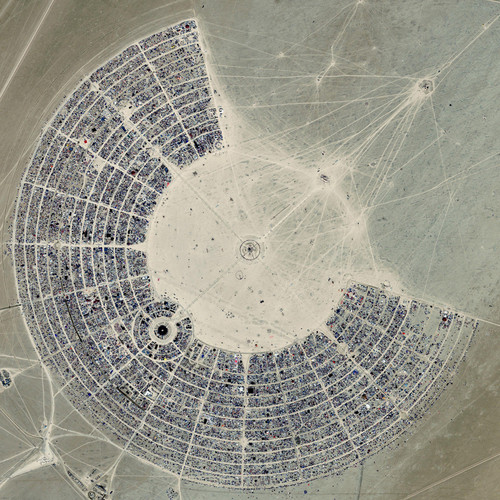
Tales from a new friend about the desert utopia that is the Burning Man community have got me dreaming of bleached out sands, lost wild nights, and no tan marks!


Wednesday, May 02, 2012
Desert Island Digital: Panja Gobel
On this week's Desert Island Digital my castaway is Panja Gobel. Panja is a designer of immersive environments and digital experiences, as well as a pretty cool cat. What she doesn't know about the interplay between people and technology isn't worth knowing. Just last month she was on the jury for the D&AD Awards in the Digital Design category.
Here's her choices for life on the island.
One tweet upon arrival on the island:
@panjapop
Yo! #unplug
One app:
Draw Something - I love the way an app can have such bad UX and still gets me hooked just on it's concept. No, I don't love it - I'm suffering from UX huffing and puffing syndrome. Recently they integrated a share button, that spoils battles by posting them prematurely on Facebook. Brilliant, who thought of that? It should really be put into the replay section of a past battle. So listen up and sort it out. I also would like a gallery, so I don't have to painstakingly screen grab it myself and generally it would be good to have some sort of scoring table. Then make everything look a little nicer and we are there. Despite these extreme UX issues I am addicted. Normally I try to have at least 10 battles going parallel so I always have at least 2 a day. Most days I just wish my finger was more pointed.
One #ff (Follow Forever) on Twitter:
@lukid - always a welcome and wayward distraction to my life
One album on Spotify:
Pata Piya or Electric Africa are just brilliant. Perfect Desert island music - cheerful music to dance to with coconut bras and banana leave skirts or just naked.
One YouTube video:
David Weiss of Fischli & Weiss died a few days ago. They were the best and most influential art duo ever. Personally I thought they were immortal. I also would be making a lot of stuff like that on the island.
One photo:
This is the kind of stuff my daughter builds around the house for us. These little worlds always cheer me up. Apparently this one is a series of cakes.

One digital luxury:
Asimo - I just love him and want him to come with me anywhere I go. Wonder how he would cope on an island… not really sure wether he could swim or whether the sand would damage his mechanism. Obviously Asimo, with his Honda genes also loves Fischli & Weiss, which will help.
Monday, April 30, 2012
Bridging the gap
Just for kicks I sometimes enjoy messing with the Netflix algorithm by watching movies way out of my usual 'taste preferences'. So with this in mind and to cheer myself up a bit, I watched 'The Bridge' - a moving documentary about the people who take their lives by jumping off the Golden Gate Bridge in San Francisco.
I've driven across the Golden Gate several times now - more often than not in The Great Red Shark while listening to the soundtrack from The O.C. But even then, the bridge holds a strange sense of foreboding within its straining ironwork and startling russet tones. The inclement weather patterns, for which SF is known, seem to begin and end at the bridge. The mists roll in and out, sometimes gleaming brilliantly in the Californian sun, other times shrouding the entire structure in cloud. On the gloomy days, with the rain and the wind and the shadow of Alcatraz in the near distance, it really couldn't be further from the picture postcard image of majestic structural engineering.

'The Bridge' includes footage of real people jumping, shot over several months by the film's makers. Apparently, on average, two people take their lives at the bridge every 15 days. It's easy, it's dramatic and it's high enough to be a sure thing. But the most emotive element in the film were the interviews with the jumpers' friends and family. Just like the ambiguous nature of the bridge itself, they veered between understanding the actions of their loved ones, while struggling to comprehend how anyone could fall so deeply into despair.

One of the parents interviewed wondered if her son chose the bridge because he "wanted one last chance to fly". The footage of him - Gene - pacing next to the barrier for hours before finally leaping triumphantly onto the rail and throwing his arms up in a swan dive takes your breath away. Just as the bridge is a testament to man overcoming nature - connecting two sides of San Francisco bay - so these fatal acts depict an individual's conquering of his or her own destiny.
You can check out the trailer out here.
And as for me, don't worry I'm back to Season 3 of The Rachel Zoe project. All good.
I've driven across the Golden Gate several times now - more often than not in The Great Red Shark while listening to the soundtrack from The O.C. But even then, the bridge holds a strange sense of foreboding within its straining ironwork and startling russet tones. The inclement weather patterns, for which SF is known, seem to begin and end at the bridge. The mists roll in and out, sometimes gleaming brilliantly in the Californian sun, other times shrouding the entire structure in cloud. On the gloomy days, with the rain and the wind and the shadow of Alcatraz in the near distance, it really couldn't be further from the picture postcard image of majestic structural engineering.

'The Bridge' includes footage of real people jumping, shot over several months by the film's makers. Apparently, on average, two people take their lives at the bridge every 15 days. It's easy, it's dramatic and it's high enough to be a sure thing. But the most emotive element in the film were the interviews with the jumpers' friends and family. Just like the ambiguous nature of the bridge itself, they veered between understanding the actions of their loved ones, while struggling to comprehend how anyone could fall so deeply into despair.

One of the parents interviewed wondered if her son chose the bridge because he "wanted one last chance to fly". The footage of him - Gene - pacing next to the barrier for hours before finally leaping triumphantly onto the rail and throwing his arms up in a swan dive takes your breath away. Just as the bridge is a testament to man overcoming nature - connecting two sides of San Francisco bay - so these fatal acts depict an individual's conquering of his or her own destiny.
You can check out the trailer out here.
And as for me, don't worry I'm back to Season 3 of The Rachel Zoe project. All good.
Wednesday, April 25, 2012
Desert Island Digital: Mills aka CHIEF WONKA™
On this week's Desert Island Digital my castaway is the self-proclaimed King of Succailure™, Twitter flaneur, Keynote master extraordinaire and co-founder of ustwo™, Mills.
Here's his choices for life on the island.
One tweet upon arrival on the island:
@millustwo
Success Island™ - CHECK
One app:
Twitter for iPhone - laying on the sun bed, beer in hand and iPhone in other = Heaven. I need to touch the hearts and minds of the industry I love.
One #ff (Follow Forever) on Twitter:
@Mr_Bingo - unquestionably the biggest fool I know but unquestionably the funniest.
One album on Spotify:
The year was 1999, the first time I heard their virginal voices, they touched me in a way I never forget. If you could bottle love, these guys would be the milkmen.
Westlife by Westlife - it's now a cult classic.
One YouTube video:
I have no idea if this is real, or if it is made by some student, but what I do know is that it's utter genius and should be the benchmark for all adverts.
One photo:
My studio - there is no place like home

One digital luxury:
My Kindle - so far I've had my Kindle for a year and have yet to get past page 78 of Onward by Howard Schultz, even though I bought it a year ago. The Kindle is genius and I love the feel of it in the hand, the simple page turn, the fact I can have thousands of brain foods in it. Having it with me on the island means I may actually find time to use it.
Here's his choices for life on the island.
One tweet upon arrival on the island:
@millustwo
Success Island™ - CHECK
One app:
Twitter for iPhone - laying on the sun bed, beer in hand and iPhone in other = Heaven. I need to touch the hearts and minds of the industry I love.
One #ff (Follow Forever) on Twitter:
@Mr_Bingo - unquestionably the biggest fool I know but unquestionably the funniest.
One album on Spotify:
The year was 1999, the first time I heard their virginal voices, they touched me in a way I never forget. If you could bottle love, these guys would be the milkmen.
Westlife by Westlife - it's now a cult classic.
One YouTube video:
I have no idea if this is real, or if it is made by some student, but what I do know is that it's utter genius and should be the benchmark for all adverts.
One photo:
My studio - there is no place like home

One digital luxury:
My Kindle - so far I've had my Kindle for a year and have yet to get past page 78 of Onward by Howard Schultz, even though I bought it a year ago. The Kindle is genius and I love the feel of it in the hand, the simple page turn, the fact I can have thousands of brain foods in it. Having it with me on the island means I may actually find time to use it.
Tuesday, April 24, 2012
Love it when you go bump bump bump
It's not often that a new technology works its way seamlessly into your life. There's almost always that love-hate tussle throughout the learning and adoption curve stages - that phase where you can see it's kind of a big deal but it takes concerted effort to remember to use it. *Looks accusingly at Path*. Indeed, many of the tech clients I've worked with have referred to that hallowed position of "owning" a part of the brain - the type of ownership that sees brand names become verbs; "Google it", "Wikipedia it", "Netflix it".
So I've been pleasantly surprised to welcome the Bump photo transfer app into my life and given that it doesn't require you to tweet about it or form communities around it, it seemed only fair to give the app a little loving shout out on here. For those of you who follow my ramblings on the @movingbrands Twitter, you'll know that my colleagues and I fell instantly, and hard, for the neat interface of hitting the space bar with your iPhone to transfer photos to your desktop. But initial thrill over, I've returned to it again and again.

If I have the choice to email a photo to myself, wait for iCloud to sync or simply "bump" it - the answer's in the lexicon.
(Also finally found an excuse to try out the new Spotify embed option. #HandClaspOfChampions)
So I've been pleasantly surprised to welcome the Bump photo transfer app into my life and given that it doesn't require you to tweet about it or form communities around it, it seemed only fair to give the app a little loving shout out on here. For those of you who follow my ramblings on the @movingbrands Twitter, you'll know that my colleagues and I fell instantly, and hard, for the neat interface of hitting the space bar with your iPhone to transfer photos to your desktop. But initial thrill over, I've returned to it again and again.

If I have the choice to email a photo to myself, wait for iCloud to sync or simply "bump" it - the answer's in the lexicon.
(Also finally found an excuse to try out the new Spotify embed option. #HandClaspOfChampions)
Wednesday, April 18, 2012
Desert Island Digital: Jack Schofield
Welcome to this, the launch edition of Desert Island Digital, where I am very excited to welcome Jack Schofield, Computer Editor for The Guardian and preeminent tech journo, as my first castaway.
Here's Jack's Desert Island Digital selection...
One tweet upon arrival on the island:
@jackschofield
Just hitting the beach. It looks like I'm stranded.... #groan
One app:
FreeCell
... because it's an entertaining way to waste five minutes. I've been playing it since Windows 3.1 came out. I like winning.
One #ff (Follow Forever) on Twitter:
I'd follow @paul_steele, because he comes across as a really nice guy and he tweets the sort of amusing links I like. In fact, we retweet each other.
One album on Spotify:
Keith Jarrett's Changeless isn't my favourite album but it's the one I'm most likely to put on repeat. I've been playing it for a couple of decades, so I know I won't get bored with it.
One YouTube video:
'A Normal Day' by Thomas and Sebastian, with the backing track that uses fragments of pop songs, such as the Kinks' You Really Got Me. That version has been removed because of our deranged copyright laws, but the "tricks" are still great.
One photo:
My wife and my son, setting off somewhere different. At the moment, she's in Malaysia and he's in Kuwait.

One digital luxury:
I'd be carrying my Nikon D90 anyway, so I'd just like to hang on to it. I used to edit photography magazines, and I could happily spend the rest of my days taking pictures.
Here's Jack's Desert Island Digital selection...
One tweet upon arrival on the island:
@jackschofield
Just hitting the beach. It looks like I'm stranded.... #groan
One app:
FreeCell
... because it's an entertaining way to waste five minutes. I've been playing it since Windows 3.1 came out. I like winning.
One #ff (Follow Forever) on Twitter:
I'd follow @paul_steele, because he comes across as a really nice guy and he tweets the sort of amusing links I like. In fact, we retweet each other.
One album on Spotify:
Keith Jarrett's Changeless isn't my favourite album but it's the one I'm most likely to put on repeat. I've been playing it for a couple of decades, so I know I won't get bored with it.
One YouTube video:
'A Normal Day' by Thomas and Sebastian, with the backing track that uses fragments of pop songs, such as the Kinks' You Really Got Me. That version has been removed because of our deranged copyright laws, but the "tricks" are still great.
One photo:
My wife and my son, setting off somewhere different. At the moment, she's in Malaysia and he's in Kuwait.

One digital luxury:
I'd be carrying my Nikon D90 anyway, so I'd just like to hang on to it. I used to edit photography magazines, and I could happily spend the rest of my days taking pictures.
Tuesday, April 17, 2012
*New Feature Alert* Introducing Desert Island Digital
It is with great excitement that I announce the launch of my first feature for Camilla's Store. Inspired by our deep love affair with tech, I'm on a mission to learn which virtual, intangible objects people hold most dear in their lives.
'Desert Island Digital' updates Radio 4's concept for a modern age by encouraging people to cut through the noise and think about what really matters to them in digital form.
My invited castaways to the desert island arrive armed only with their smartphone and a wifi connection. However, the native, highly reclusive tribe are very strict about how much content they can access.
So just what will my castaways need to survive digitally?
Find out tomorrow when my first, and very special, castaway reveals his Desert Island Digital.
#desertislanddigital

'Desert Island Digital' updates Radio 4's concept for a modern age by encouraging people to cut through the noise and think about what really matters to them in digital form.
My invited castaways to the desert island arrive armed only with their smartphone and a wifi connection. However, the native, highly reclusive tribe are very strict about how much content they can access.
So just what will my castaways need to survive digitally?
Find out tomorrow when my first, and very special, castaway reveals his Desert Island Digital.
#desertislanddigital

Sunday, April 15, 2012
Are anxious career women the new Stepford wives?
Time was when the narrative of women revolved around finding a man, getting married and starting a family. Then it got updated so they could have a bit of a career before then finding a man, getting married and starting a family. Increasingly, however, I’m seeing the emergence of a new narrative and one no less limiting or frustrating for all concerned. One where a woman has a career, yet is made to feel so strung-out and anxious by her job that she has to give up even the notion of a personal life.
Hit series, ‘Homeland’ and ‘The Killing’, are both powerful examples of how the imagery and ideology of this new female narrative is entering popular culture. In these stories, the woman is almost always ferociously intelligent, highly driven, and - surprise surprise - stick thin. But unlike her housewife counterpart wasting away on the Tracy Anderson “teeny tiny body” Method in the suburbs, this woman believes that it’s not just lunch that’s for wimps; surviving on caffeine, prescription drugs and late night junk food, professional ambition becomes her only sustenance. As celebrity stylist Rachel Zoe has said, “In the war between my work and my personal life, my work always wins”

Both shows’ protagonists are portrayed as being so absorbed in and by their jobs, that they can barely function in their real lives. In ‘Homeland’ Carrie is so focused on safeguarding the American nation that she has to sleep on her sofa and wash her armpits in the sink. While in ‘The Killing’ Sarah deserts her fiance, her son (and apparently her dress sense ) in the quest to bring justice.
While never addressed in male-lead entertainment, it seems that a woman’s ‘war’ between her work and home life has enough cultural fascination to become a key storyline. When we see Don Draper or Luther passed out on the sofa with a highball they appear manly and noble - a noir hero. Yet when it’s a woman on the sofa, she’s evidently unhinged, troubled and heading for a meltdown. Why are we invited to find a working women’s anxiety quite so appealing?

In a recent article on anxiety in New York magazine, one female interviewee is quoted, “I use my anxiety to be better at what I do”. And it made me wonder why is the term ‘anxiety’ being used in place of ‘ambition’? Was that overwhelming, reverberating, buzzing determination to be the best you can possibly be being mis-interpreted as anxiety? Is the battle cry in a women’s work/life ‘war’ being experienced through a lens of guilt?
Ten years ago, before technology put the pace of modern life into fifth gear, women were presented with narratives that included an “and” - work and home, career and family, sex and the city. Today, in the face of economic upheaval and exponential change, it seems the scope of a female narrative is closing in once more. They say you can never be too rich or too thin. Now you can never be too anxious about your work/life balance as well.
Hit series, ‘Homeland’ and ‘The Killing’, are both powerful examples of how the imagery and ideology of this new female narrative is entering popular culture. In these stories, the woman is almost always ferociously intelligent, highly driven, and - surprise surprise - stick thin. But unlike her housewife counterpart wasting away on the Tracy Anderson “teeny tiny body” Method in the suburbs, this woman believes that it’s not just lunch that’s for wimps; surviving on caffeine, prescription drugs and late night junk food, professional ambition becomes her only sustenance. As celebrity stylist Rachel Zoe has said, “In the war between my work and my personal life, my work always wins”

Both shows’ protagonists are portrayed as being so absorbed in and by their jobs, that they can barely function in their real lives. In ‘Homeland’ Carrie is so focused on safeguarding the American nation that she has to sleep on her sofa and wash her armpits in the sink. While in ‘The Killing’ Sarah deserts her fiance, her son (and apparently her dress sense ) in the quest to bring justice.
While never addressed in male-lead entertainment, it seems that a woman’s ‘war’ between her work and home life has enough cultural fascination to become a key storyline. When we see Don Draper or Luther passed out on the sofa with a highball they appear manly and noble - a noir hero. Yet when it’s a woman on the sofa, she’s evidently unhinged, troubled and heading for a meltdown. Why are we invited to find a working women’s anxiety quite so appealing?

In a recent article on anxiety in New York magazine, one female interviewee is quoted, “I use my anxiety to be better at what I do”. And it made me wonder why is the term ‘anxiety’ being used in place of ‘ambition’? Was that overwhelming, reverberating, buzzing determination to be the best you can possibly be being mis-interpreted as anxiety? Is the battle cry in a women’s work/life ‘war’ being experienced through a lens of guilt?
Ten years ago, before technology put the pace of modern life into fifth gear, women were presented with narratives that included an “and” - work and home, career and family, sex and the city. Today, in the face of economic upheaval and exponential change, it seems the scope of a female narrative is closing in once more. They say you can never be too rich or too thin. Now you can never be too anxious about your work/life balance as well.
Monday, April 09, 2012
Preference Setting (Part 1)
About a year ago I wrote a post entitled “20 Reasons Not to Date a Digital Strategist”. It was just a bit of fun, but since April that entry has had almost 10,000 views and travelled from the UK to North America, Canada, Australia and most of Western Europe. Clearly I was not alone in my exasperation - and amusement - at the undefined rules of engagement for social media when it came to real life relationships. And, while corporations busily debate the financial value of a “like”, it seems regular people everywhere are trying to figure out its emotional value.

Claiming expertise in the management of connections and engagement online is a lucrative career choice these days - ensuring brands maintain consistent, rewarding relationships with their customers. Yet, there exist no guidelines (official or otherwise) for managing personal relationships across so many platforms. Recently Mashable reported that 1 in 10 people playing the Scrabble-esque word game Words with Friends has directly led to a "hook up". While Facebook is currently cited in one third of all UK divorces. For perhaps the first time in human history branded platforms - and the behaviour they nurture, encourage and, ultimately, manipulate for their own commercial ends - are affecting our interpersonal relationships. Ahead of Facebook's IPO, Zuckerberg even went so far as to admit wanting to actively "rewire" people and they way they form connections!
Social media brands nurture a behaviour that revolves around constant self-refinement. Their business models rely on our belief that we are only as interesting as our last post, or as popular as the number of followers we have. So much so that it's easy to get caught up in the expectation to continuously like, follow, friend, favourite, re-pin, and re-tweet. Russell M Davies said recently that social media is “networking for shy people”. Safely adhering to the rules of a predetermined user experience, it's easy just to pick out and present our best sides, our wittiest comments and our coolest links. But Facebook, Twitter and the like are all engines by which to curate ourselves, and it is these curated selves - not our real selves - with which we are now forming new, online relationships.

But what happens to the online, curated self in the real world, when the shy people have to meet up offline? Coping with the reconciliation of avatar to human being becomes a daunting, even stressful, prospect. Are we ever going to be as interesting, glamorous or funny? What happens if the connection formed online disappears offline? Suddenly, the potential for traversing an emotional minefield grows vast. Gone are the days when you could yank your phone line out the wall - 80’s movie style - and cry into your tie-dye leggings til you felt better. Now - connected across multiple platforms - you’re on the Internet, they’re on the Internet and, without really wanting to, you know each other’s every thought and move. The complex machine learning and recommendation engines behind Facebook and Google were designed for the group hug of the open web, not the late-night Internet-loitering individual.


Claiming expertise in the management of connections and engagement online is a lucrative career choice these days - ensuring brands maintain consistent, rewarding relationships with their customers. Yet, there exist no guidelines (official or otherwise) for managing personal relationships across so many platforms. Recently Mashable reported that 1 in 10 people playing the Scrabble-esque word game Words with Friends has directly led to a "hook up". While Facebook is currently cited in one third of all UK divorces. For perhaps the first time in human history branded platforms - and the behaviour they nurture, encourage and, ultimately, manipulate for their own commercial ends - are affecting our interpersonal relationships. Ahead of Facebook's IPO, Zuckerberg even went so far as to admit wanting to actively "rewire" people and they way they form connections!
Social media brands nurture a behaviour that revolves around constant self-refinement. Their business models rely on our belief that we are only as interesting as our last post, or as popular as the number of followers we have. So much so that it's easy to get caught up in the expectation to continuously like, follow, friend, favourite, re-pin, and re-tweet. Russell M Davies said recently that social media is “networking for shy people”. Safely adhering to the rules of a predetermined user experience, it's easy just to pick out and present our best sides, our wittiest comments and our coolest links. But Facebook, Twitter and the like are all engines by which to curate ourselves, and it is these curated selves - not our real selves - with which we are now forming new, online relationships.

But what happens to the online, curated self in the real world, when the shy people have to meet up offline? Coping with the reconciliation of avatar to human being becomes a daunting, even stressful, prospect. Are we ever going to be as interesting, glamorous or funny? What happens if the connection formed online disappears offline? Suddenly, the potential for traversing an emotional minefield grows vast. Gone are the days when you could yank your phone line out the wall - 80’s movie style - and cry into your tie-dye leggings til you felt better. Now - connected across multiple platforms - you’re on the Internet, they’re on the Internet and, without really wanting to, you know each other’s every thought and move. The complex machine learning and recommendation engines behind Facebook and Google were designed for the group hug of the open web, not the late-night Internet-loitering individual.

So, I guess that number 21 on the list of reasons not to date a digital strategist is that we're going to over think this situation. The gender divide, the 'Digital Native' generation, and taking existing, real world relationships online are all part of it, and aspects which call for separate consideration. As brands and technological innovation impact on how we build interpersonal relationships, the opportunity for us to define the rules of engagement becomes greater yet harder. Without taking the backwards step of disconnecting altogether, we must learn to live our real lives whilst simultaneously plugged into an online world.
Photos via Ida Rhoda, Howard Grey, Henri Lartigue
Sunday, April 01, 2012
No more cat videos
I've given up cat videos. And pictures of cats. And their kitten counterparts. You may scoff at this insane declaration, but it's harder than you think.
It's not like I was really that into them in the first place, but they have become a mainstay of content sharing across every conceivable platform - starting around the Millennium with the dreaded round robin emails entitled "50 cute baby kittens asleep; please fwd or you'll die" and ending today with entire Pinterest boards dedicated to these feline time wasters.

Because that is what they are. During the SOPA/PIPA issue, Darren - my Creative Director - sarcastically wondered just how he might continue to encounter kittens and their cuteness were the laws to be brought into play. Just where, he asked, could he get his hit of small animals water skiing? It would be a crisis!
And that's when it hit me. I do not 'need' to look at photos or videos of cats. The me that has not watched a cat video on any given day is no different to the me that has just watched a cat video, except that I now have one to two minutes less time to enjoy my life. So why do I feel such pressure to continually click on anything prepositioned by the term "aw"?
So I stopped. I stopped clicking. That was easy. What I didn't expect was the outpouring of anger and animosity from my peers. "What do you mean you're not looking at cat photos?", "You should really just watch this one though!", "It's soooooo cuuuuute!", "But it's a kitten peeping out of a fuckin' basket, you cold hearted biatch!"

Why does it matter? Why were people getting so upset? In these modern times, with so few spiritual crutches to help us greet each dawning day with a sense of hope and positivity, are cat videos all we have left? In denying Kittah's right to be on the ceiling, was I in fact making a larger statement about human kind's desire to believe in something, anything?
Maybe. Maybe not. As I move on to eliminating dogs, lemurs and - one day - Justin Bieber - from my screen, perhaps I will suffer some kind of cute-deprivation related breakdown. But until then, I'm enjoying taking those extra moments previously wasted on tiny little paws, and applying them to something that makes me go "Hm", instead of "Aw".
Monday, March 26, 2012
Infinite Loops
Last year I was invited by Matt Judge to contribute a piece for his printed compendium entitled Design Assembly III. I chose to write about my emerging obsession with how brands can utilise social media data to better serve, and engage with, their audience. In typical Camilla Grey form, however, I only learned about the concept of "big data" about a week after the book went to print. So, while the piece is entirely concerned with the subject of big data, you will not find the term anywhere in the piece.
To make up for it, I recently went along to a Gigaom conference - Structure: Data. The talks I attended raised some fascinating issues surrounding the future of Big Data, and I look forward to exploring them further both here and in my work. Meantime, here's the copy from my DA3 contribution. It's a #longread at 2000 words, so grab a cup of tea, settle back, and marvel at how the tech buzzword de jour doesn't even get a look in!
****
"Gone are the days when you can just walk in to a boardroom, say "Twitter" and expect someone to pay you $20,000 and land yourself on the cover of Wired magazine. Now you have to say "Foursquare"." - Alex Bragg, Founder, A Bajillion Hits
It's no longer revolutionary to acknowledge that we are living in crazy, fast moving times. But while brands are learning to lose control and love change on the surface, it's a growing challenge for them to keep control and plan for change behind the scenes. It's my belief that a modern brand, especially a consumer-facing one, needs to create an infinite loop between what it says it is and what everyone else says it is. Brands today are dealing with customers who live in a fully-digital, always on, on-demand, one-click shopping, auto-filling, seamless world where everything "just works", and it's not ever going back to how it was. For me, the beauty of technology isn't just the exciting, creative things brands can do with it to engage customers; it's all the logging, monitoring and measuring capability going on under the hood that savvy brands can use to really get to know their customers, and serve them better.
With a few rare exceptions, the majority of brands are floundering in an online space they barely understand. Approaching digital on any level deeper than a website or a Facebook page takes dedicated ideological and financial investment and it can be difficult to know where to begin. From within the bubble of our design studios, media agencies, tech start-ups and app development companies, it's very easy to feel like we understand the rules of the game. With "change, adapt or die" as our mantra, we gorge ourselves on the contents of our Google Readers and scroll frantically through the Twitter feed. We are confident in the belief that we possess an ever-updating source of pre-Beta information that will make what we produce profoundly successful as well as hot, liked, viral and influential.
But sitting outside of the bubble with their heads in their hands are our clients. Around the world, across every industry, from within companies of every possible size, there are business leaders struggling to navigate a landscape that looks profoundly altered with each morning's dawn. Long gone are the days when they could make a great product, tell people about it with a sexy print ad, and have Peggy fix them a Martini while the sales figures climbed. Today they've got some 22-year-old intern - head swathed in a pair of huge headphones, displaying pro-levels of tabbed browsing - strolling in at 10am clutching two phones only to announce that the social media campaign they were given as a time killer has "gone viral" and sent consumers into a spending frenzy.
The idea of throwing $20,000 at someone using the latest buzz word is funny because it's true. When clients are banging on the door demanding apps, augmented reality, social media campaigns and a viral video it's all a sign of a deep-set anxiety in the face of relentless change. What few of them realise is that dealing with this relentlessness is not just about one-off ideas, but about focusing on a considered, strategic way to reach their customers across platforms. This is where water-tight brand strategy and innovative digital strategy begin to deliver real, measurable impact. While the brand strategy dictates the core story of the brand and who it's trying to reach with that story, digital strategy shows how technology can build the bridge between the brand and its customers. I want to see more brands looking at the platforms their audience are using already and the way they're using them, and creating content that fits that behavior. Most importantly, brands today need not only to be heard on emerging platforms, they also need to know how to listen on them as well, and never before have they been provided with such a clear, real-time mirror of who they're reaching and how they're transposing in the real world.
The market is very much in its infancy, but there is an expanding list of companies giving quantifiable meaning to the constant stream of information and content being created online. I recently became acquainted with a San Francisco-based company called PeopleBrowsr. With three thousand days of indexed data from Twitter, public Facebook pages and blogs, PeopleBrowsr have developed a searchable database of social content which operates like the Google of social analytics. Finally I'd found a way to reveal not only what was being said about any given brand, but who was saying it, where they were saying it, and what influence it had on their wider communities. It's geeky to admit it, but the ability to map hard data to human behavior is not only core to a 'moving world' approach to strategy, but it's what gets me out of bed in the morning. It means I'm not just walking into rooms full of anxious clients and saying "Foursquare". It means I can walk in armed with a detailed insight into how their brand perception in the real world is measuring up to their brand positioning. From there, we can start to look at the language people are using around the brand, the emotions they are expressing about it, whether they are experiencing the brand with friends or alone, at home or out and about, at night or in the day, or if they're adding photos and videos to their written content. And once you start thinking about these things, the ways to reach out to them seem obvious.
One brand who appears to make this joined-up approach look very easy indeed is Burberry. They aren't just creating Facebook and Twitter profiles for the sake of it or because they think that's enough. Instead, they're seeking out the most powerful ways to connect their brand story with their existing and potential customer groups. I've watched how Burberry have spent the past few years re-asserting their position as an iconic British brand in ways which demonstrate an innate understanding of their target customer - the young, iPad-toting, high-net-worth individual. At this year's London Fashion Week, Burberry upped their game even further in a bold move which turned their intimate fashion show into a global event. Through a well-produced live stream of the show and Twitpics of every look before each model hit the catwalk, Burberry set their infinite feedback loop in motion. They demonstrated a clear understanding of how fashion news circulated and responded by creating high-quality platform-specific content for their audience. By being the first to the post with their latest looks they relinquished control and influence from some over-swagged blogger in the front row. Foremost, they were present and in-control of any conversations about them - able to listen to and learn from their audience before the new Season's work got under way. Clearly having once lost command of their brand image to northern "chavs" has stood them in good stead for the unregulated liberalism of social networks. Many brands have struggled to adjust to the diplomacy of the digital space, and none more so than luxury brands. With no austere doorman to monitor who's coming and going online, most luxury labels prefer to proffer little more than an interactive look book and a nicely produced Vimeo video. Burberry, however, seem not just to be responding to change, but leading it in their industry.
So where is all this going in the future? At the intersection of mobile, location and social lies a golden pool of content - user information fused with physical behavior and sentiment. By 2020, I will have over a decade's worth of Foursquare check-ins, tweets, and in-app purchases. I - and millions of others - love publicly sharing what we're up to with our friends and followers, and if brands want to look at that content and make better recommendations, suggest more localized deals, and provide more personalized offers, then that's absolutely fine by me. It sounds scary, but I see toddlers on the bus every day who haven't yet developed speech but are effortlessly swiping and pinching their way around their Mum's iPhone. These "Digital Instinctives" just aren't going to see their world as being divided into online and offline. As "Digital Instinctives" grow up, human behavior and technology will become ever more interlinked. The more they live and hang out publicly in the digital space, the more data they will create, and the more personalized their brand experiences can become. Any brand that is not dedicated to understanding the anthropology of life online and figuring out how best to listen, learn and engage honestly will fail to evolve, and eventually become extinct.
Integrating the philosophy and technology behind infinite feedback loops into a company takes time. Those 22-year-old interns may seem to have all the answers when it comes to buzz words, but few of them know how to run and grow a business, or the experience to lay down transformative infrastructures and systems. Adapting to change relies on the removal of walls everywhere - between the bright young things and the wise business leaders, between creativity and technology, between us and our clients, and between the controlled space of the brand world and the relentless landscape of the real world. As a Strategist, I couldn't be more inspired by the pace of change and the opportunities it provides for the brands I work with. It's exciting to have conversations about how brands can be expressed in ways which didn't exist five years ago, one year ago, or last month. And I love that together we're now able to plan for a tomorrow we can't even begin to imagine.
- Published here with permission of Matt Judge. Written October 2011.
Sunday, March 25, 2012
Sentences on concept
While in New York this past week, I went upstate to visit the Dia:Beacon gallery. Just an hour and a half north of Manhattan - a stunning journey along the Hudson - Dia:Beacon houses major works of art from the 1960s to the present within nearly 300,000-square-foot of naturally lit gallery space.
Of all the artists in the collection - including Louise Bourgeois, Michael Heizer and Gerhard Richter - the one who captivated me the most was Sol LeWitt. I'd not previously heard of him, so to be confronted suddenly with his almost algorithmic approach to art was overwhelming. LeWitt laid down rules for the construction of his pieces, and defined Conceptual Art in the process. Here, it appeared to me, was a strategist's artist.

In LeWitt's 'Sentences on Conceptual Art' (1969), two from his list of 35 stand out.
10. Ideas can be works of art; they are in a chain of development that may eventually find some form. All ideas need not be made physical.
32. Banal ideas cannot be rescued by beautiful execution.

As someone who spends most of my time articulating ideas in preparation for the creative process, LeWitt's words are inspirational. He clearly views the definition of the concept as an intrinsic part of the finished piece - the perfect output only achievable through the realisation of a perfect idea. As a brand strategist, I fully aspire to inform the creative process in that way.
For some reason LeWitt's work reminds me of a collection of Da Vinci's sketches I saw in Paris. Not the universally known 'Vetruvian Man', but just simple drawings of the human form - a leg, a neck, or a hand. Da Vinci's finished paintings are astounding, but his sketches show a working, a refining and a laying down of immovable rules, which can never be compromised. Yet, while Da Vinci needed to understand the biological makeup of the body in order to realistically capture his subjects, LeWitt had no such need. Driven only, it seems, by the intention to create, LeWitt makes the intention a creative act.
Of course, I may be looking at this all wrong. I have an Amazon order on its way, which should enlighten me further. Nevertheless, as an educated onlooker, or otherwise, I am in awe of how LeWitt creates something far more powerful than the sum of its parts, purely by laying those parts bare to the viewer.
Of all the artists in the collection - including Louise Bourgeois, Michael Heizer and Gerhard Richter - the one who captivated me the most was Sol LeWitt. I'd not previously heard of him, so to be confronted suddenly with his almost algorithmic approach to art was overwhelming. LeWitt laid down rules for the construction of his pieces, and defined Conceptual Art in the process. Here, it appeared to me, was a strategist's artist.

In LeWitt's 'Sentences on Conceptual Art' (1969), two from his list of 35 stand out.
10. Ideas can be works of art; they are in a chain of development that may eventually find some form. All ideas need not be made physical.
32. Banal ideas cannot be rescued by beautiful execution.

As someone who spends most of my time articulating ideas in preparation for the creative process, LeWitt's words are inspirational. He clearly views the definition of the concept as an intrinsic part of the finished piece - the perfect output only achievable through the realisation of a perfect idea. As a brand strategist, I fully aspire to inform the creative process in that way.
For some reason LeWitt's work reminds me of a collection of Da Vinci's sketches I saw in Paris. Not the universally known 'Vetruvian Man', but just simple drawings of the human form - a leg, a neck, or a hand. Da Vinci's finished paintings are astounding, but his sketches show a working, a refining and a laying down of immovable rules, which can never be compromised. Yet, while Da Vinci needed to understand the biological makeup of the body in order to realistically capture his subjects, LeWitt had no such need. Driven only, it seems, by the intention to create, LeWitt makes the intention a creative act.
Of course, I may be looking at this all wrong. I have an Amazon order on its way, which should enlighten me further. Nevertheless, as an educated onlooker, or otherwise, I am in awe of how LeWitt creates something far more powerful than the sum of its parts, purely by laying those parts bare to the viewer.
Tuesday, March 13, 2012
Notebook after notebook
"As every writer knows, the talk that fills one’s head—and, eventually, notebook after notebook, or computer screen, where all the wrong words gather and conspire to undo one’s role as writer—must end in humiliation: being published. Being published means your mistakes are no longer your own, you’ve smeared shit on your mirror image, in public." - The New Yorker review of 'All We Know'


Thursday, March 08, 2012
Men are from Mars. Women just got back from Waitrose
So, it's International Women's Day today and I've borrowed the idea from my esteemed lady colleague Rosanna to take a moment to joyously celebrate a few fab ladies. And, yes, the boys do a pretty ace job as well, but rarely does their hair look quite as awesome as they do it. #justsayin
The business owners.
Starting out in my career I was lucky enough to work successively for two female business owners. Firstly Chantal Coady at Rococo Chocolates. Altough somewhat reserved and quiet, Chantal not only gave me a first class education in chocolate (the history, the geography, the sensuality), but was also gracious enough to give a gentle shrug at my naive enthusiasm while allowing me to run with my ideas and see them through. Secondly, Mary Portas who was petrifying, but nonetheless proved that you can dress, walk, and talk like a woman but still be putting it down in the boardroom.

The creative powerhouses.
When I first started at Moving Brands Panja Gobel was one of the few women on the Creative Floor. (Don't worry, there's now loads of us). With a playful approach to technology, bright orange hair, crazy prints, an even crazier way of looking at the world, and - more often than not - a blue-eyed baby clinging to her hip - Panja was not a bad role model to have about the place. She has it all. And in every colour! Meantime, out in San Francisco I met Lisa Smith, a non-stop talking, non-stop laughing Essex girl transposed across the Atlantic. Fresh on the West Coast from New York (she's since returned and joined Wolff Olins), she has that cool big sister vibe with tales of amazing secret bars, weekend trips to Coney Island and oh my god, the most incredible handbags ever. An truly fantastic designer, Lisa showed that you can put your career first and still have a bloody great time.

The young money.
Oh the scary young ones biting at my heels and my ankles! Ellen Turnill Montoya - an energetic fireball of creativity and ideas. Wise way beyond her years, innately kind and quite possibly the most fun person I've ever met. Whether it be as curator of the Tate, or the next fashion visionary, I am in absolutely no doubt that her future will be dazzling in its glory. And the very lovely Mily Williamson who gives great blog and who finally sent over her CV for an internship after months of me stalking her on Twitter. Mily's instinctive approach to strategy is so good that if I didn't like the girl so goddam much, I'd hate her!

The fondly remembered.
On a final note, I want to shout out my Grandmother "Gran-Gran" who's idea of childcare was a slow stroll round Selfridges. Those early trips in my formative years started a love affair with brands and retail that has never ended. I feel Gran-Gran at my shoulder at the launch of every project and hope she's thinking the girl did good.
To all the women out there doing good - Happy International Women's Day.
>Isabelle. Julia. Vicky. Celia. Marian. Rosanna. Georgina. Marija. Rachel. Phoebe. Sheema. Mariette. Marianne. Saeeda. Sheira. Zoe. Katie. Fiona. <
Monday, February 27, 2012
Hockney: The Art of Seeing
I thoroughly, thoroughly recommend that you watch the Hockney documentary which aired on BBC2 this evening. He is so articulate, so self-knowing and so inspired by change of all kinds, that it really was a revelation.
In one part of the programme, Hockney talks about how memory affects how we see the world. That no two people can ever look at the same thing in the same way. And, in that sense, we are all alone. But, while even he laughs slightly at his bleak philosophy, there is something magical about that idea. How boring would this world be if we all looked and saw in the same way?

It feels somewhat trite to say, but Instagram is confirmation of this beautiful aloneness we all experience. The ease and speed of the platform allows us all to share what we each are noticing in the world; the little things which prick our memories and emanate with individual meaning. On a larger, more artistic way, this is precisely the mentality Hockney seems to be both reflecting and encouraging in his RA show. The eighteen screen, moving image landscape allows each viewer to focus on what they are drawn to, not what the artist intends.

Whether it be time shifting the seasons, or providing the passage for technological progress, Hockney's embrace of it is a lesson for us all.
David Hockney: The Art of Seeing
http://www.bbc.co.uk/iplayer/episode/b01c7wmr/The_Culture_Show_2011_2012_David_Hockney_The_Art_of_Seeing_A_Culture_Show_Special/
In one part of the programme, Hockney talks about how memory affects how we see the world. That no two people can ever look at the same thing in the same way. And, in that sense, we are all alone. But, while even he laughs slightly at his bleak philosophy, there is something magical about that idea. How boring would this world be if we all looked and saw in the same way?

It feels somewhat trite to say, but Instagram is confirmation of this beautiful aloneness we all experience. The ease and speed of the platform allows us all to share what we each are noticing in the world; the little things which prick our memories and emanate with individual meaning. On a larger, more artistic way, this is precisely the mentality Hockney seems to be both reflecting and encouraging in his RA show. The eighteen screen, moving image landscape allows each viewer to focus on what they are drawn to, not what the artist intends.

Whether it be time shifting the seasons, or providing the passage for technological progress, Hockney's embrace of it is a lesson for us all.
David Hockney: The Art of Seeing
http://www.bbc.co.uk/iplayer/episode/b01c7wmr/The_Culture_Show_2011_2012_David_Hockney_The_Art_of_Seeing_A_Culture_Show_Special/
Monday, February 20, 2012
The rise and rise of the social media audience

First they were ignored. Then they were the enemy. Then they were tolerated. Then they were given first look via Twitter. Now they get a formal invitation.
Wednesday, February 15, 2012
Divorce Decor
What is this about? A new interior design specialism focuses on an emerging breed of client, the divorced man. According to a piece on the New York Times, divorcees are looking to create homes "fit for a family" but that also "appeals to dates". Apparently "a very large television" and the "persistent problem" of exposed wiring are key considerations for today's post-marriage singles. Niche interiors company, Sexy Bachelor Pad claim to bring "a sense of playfulness, humor, & down-to-earth communication to what has the tendency to feel overwhelming and stressful to most men". Loosely translated, the implication is that that black satin sheets are out, 500-thread count waffle bedding is in.

This is white people problem solving at its best. Identify a latent need, and commercialise the hell out of it. Time was that first wives had only to worry that the 'other woman' was a pert blonde who graduated in the same decade as the kids. Now, it's the ex-director of design and brand experience for W Hotels who's the major threat. Susan Manrao works her decorative magic through "vignettes" and "whimsical details" to ensure her gentlemen clients avoid the hermit existence of a man cave, and instead feel confident breaking in the Sabatier knife collection over some porcini mushrooms, while their dates admire the exposed brickwork.

Evidently, frisky divorcees are too preoccupied with the transformative power of an A.P.C linen blend blazer and splashing out on leather iPad covers to bother with such mundane issues as "procuring art" and "reallocating space". Le sigh.
 Photos courtesy of The Sartorialist

This is white people problem solving at its best. Identify a latent need, and commercialise the hell out of it. Time was that first wives had only to worry that the 'other woman' was a pert blonde who graduated in the same decade as the kids. Now, it's the ex-director of design and brand experience for W Hotels who's the major threat. Susan Manrao works her decorative magic through "vignettes" and "whimsical details" to ensure her gentlemen clients avoid the hermit existence of a man cave, and instead feel confident breaking in the Sabatier knife collection over some porcini mushrooms, while their dates admire the exposed brickwork.

Evidently, frisky divorcees are too preoccupied with the transformative power of an A.P.C linen blend blazer and splashing out on leather iPad covers to bother with such mundane issues as "procuring art" and "reallocating space". Le sigh.

Saturday, February 04, 2012
"Do something first. Then talk about it"
I just watched a Style Forum Special on Tom Ford twice. Having spent the first time crawling around on the floor lusting after Tom “three baths a day” Ford, the second time through I was actually able to focus on what the man was saying. And he’s pretty bloody on it.
Tom Ford - the man, the creator, the brand - has always been up there with Perrier on my list of most favourite brands ever. But the purchase of a Tom Ford lipstick cemented his position at the top. I’m becoming far too long in the tooth to get evangelical about branding, and Selfridges in the Sales is enough to murder anyone’s sense of “brand experience”. So I wasn’t holding out much hope when I elbowed my way through to the concession. But there, laid out like gilt-edged weaponry, was the most incredible, brand-led packaging I’ve ever seen. The bustling crowd faded away, the orange-tinted sales assistant disappeared, and the bright shopping lights dimmed to a sexy flicker - I was in Tom Ford world.

In the film, Tom explains where the brand story emanates from. He says, “You have to look inside yourself… You start to develop a vocabulary that is a personality. And the brand then takes on a personality based on your personality”. And man, is it one dashing personality - sultry, meticulous, and unarguably gorgeous. It’s a brand personality so astoundingly charming, so memorable, that it has to power to filter down through the couture collection, through the pret-a-porter collection, through the accessories, through the cosmetics and, finally, through to packaging. Never before have I seen a cardboard lipstick box so loaded with meaning, suggestion and story.

It’s not just rock hard branding that infuses Tom Ford products, stores and packaging with that heady scent of je ne sais quoi, however. Dissecting his working practices, Tom reveals, “The clues for everything that's going to come next are here now. And either you're a sleuth and you're thinking about it cerebrally or you feel it. There are no right or wrong answers - it's intuitive”. This “intuition” was there when he transformed Gucci in the nineties, and YSL in the noughties, and it’s here now too in the thousand-doller suits and in this little lipstick box. Knife-sharp lines in a world of soft curves, real attitude in a sea of subtlety.
Tom Ford - the man, the creator, the brand - has always been up there with Perrier on my list of most favourite brands ever. But the purchase of a Tom Ford lipstick cemented his position at the top. I’m becoming far too long in the tooth to get evangelical about branding, and Selfridges in the Sales is enough to murder anyone’s sense of “brand experience”. So I wasn’t holding out much hope when I elbowed my way through to the concession. But there, laid out like gilt-edged weaponry, was the most incredible, brand-led packaging I’ve ever seen. The bustling crowd faded away, the orange-tinted sales assistant disappeared, and the bright shopping lights dimmed to a sexy flicker - I was in Tom Ford world.

In the film, Tom explains where the brand story emanates from. He says, “You have to look inside yourself… You start to develop a vocabulary that is a personality. And the brand then takes on a personality based on your personality”. And man, is it one dashing personality - sultry, meticulous, and unarguably gorgeous. It’s a brand personality so astoundingly charming, so memorable, that it has to power to filter down through the couture collection, through the pret-a-porter collection, through the accessories, through the cosmetics and, finally, through to packaging. Never before have I seen a cardboard lipstick box so loaded with meaning, suggestion and story.

It’s not just rock hard branding that infuses Tom Ford products, stores and packaging with that heady scent of je ne sais quoi, however. Dissecting his working practices, Tom reveals, “The clues for everything that's going to come next are here now. And either you're a sleuth and you're thinking about it cerebrally or you feel it. There are no right or wrong answers - it's intuitive”. This “intuition” was there when he transformed Gucci in the nineties, and YSL in the noughties, and it’s here now too in the thousand-doller suits and in this little lipstick box. Knife-sharp lines in a world of soft curves, real attitude in a sea of subtlety.
Friday, January 20, 2012
Photos my friends sent me this week


There's some life lessons right there. (via @ellen_tm_ and @kowchow)
Saturday, January 14, 2012
The Instagram post
Instagram - the photo sharing app - was one of the overnight successes of 2011. No sooner had users everywhere discovered the joy of snapping, filtering and sharing photographs of their daily lives, than big name brands like Burberry and H&M were signing up. Hell, even President Obama got in the game last week. And yet, despite the uptake, the app has remained small. It still has no online presence, preferring instead to release its API and allow others to make of the content what they will. Indeed, a friend remarked recently how Instamap had revealed loads of new users in his area - presumably as a result of getting an iPhone for Christmas.

Most interesting, perhaps, is how people are using the app amongst their other social platforms. For me, Instagram is to Twitter, what Vimeo is to YouTube; quality not quantity; all about the "ooh lovely!", not so much the LOLs. Twitter is quick-witted, fast-paced and brutal. Instagram is sedate, considered and subtle; real life but in sexy soft focus.

I purposely only follow a few people on Instagram (63), so my experience is somewhat limited. I'm also unusually protective of my privacy settings - aware of the fact that I'm posting photos of my actual life - not just tweeting from behind the curtain of Twitter. Mills from ustwo allegedly unfollows anyone posting more than two photos without filters, or of their kids, in a row. How's about them guidelines? I get a real kick out seeing the world through the eyes of the people I follow - the things they notice, the moments they capture, and all the little things that really matter to them.

Yet, despite the very simple purpose of the app, we are still hard wired to share thoughts and communicate in the form of words. As if we haven't got enough platforms requiring us to coherently string sentences together, I see example after example of the written word on Instagram; paragraphs from articles, headlines, and post-it notes. Maybe it's the tangibility of a typeface or handwriting that we're really missing on other platforms and which Instagram reinstates. Trapped in a world of fonts dictated by Apple, Google and Twitter, we are deprived of that extra layer of meaning provided by a serif, or the amusing quirk found in someone's scrawl.

On a final note @thekingmob posted a photo of a web page yesterday (below). Seeing this, the humble link suddenly looks like a modern day equivalent of the Internet dial-up tone. Why are we clicking meaningless lists of numbers and letters, when a visual has so much power? For now, I can't get my head around this photo at all. But I'm pretty certain it is of great significance.

Subscribe to:
Posts (Atom)