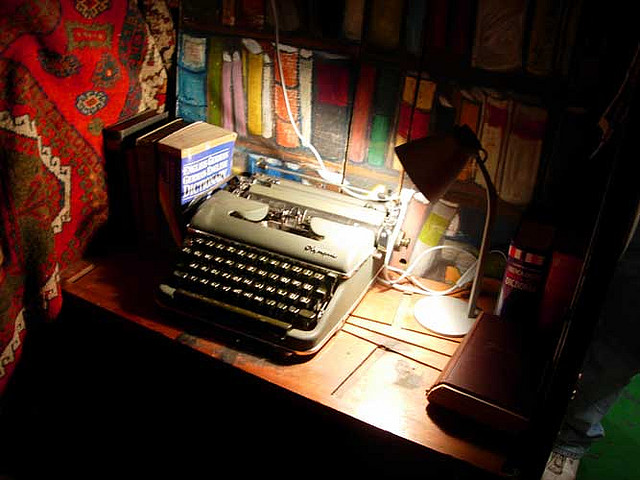
“I once lost a pair of earrings and tried to Google them”. So says my byline on this very blog, as it has for the past three or four years. Only, lately, it’s just not that funny anymore. It’s not funny because it’s possible. Between Google and “the internet of things” the ability to search the internet for the location of unique, physical objects is happening, has happened.
And in a good, excited, optimistic way, I am completely freaked out. In such a short space of time we’ve gone from plugging things in and getting them to work, to Steve Jobs’ vision for things that “just work”, and now we’re into stuff that is working all the time while you’re just busy enjoying life. Which is exactly what technology should be about - because right now, sitting as we are on the corner of Everything and Everywhere, our relationship with technology is demented. Look around - we’re all hunched over phones and laptops like voluntary returnees to stage numero uno of Darwin’s evolution of man. Yes, Google Glass may be ridiculous, but at least we’re walking upright again.
It’s not just the hardware that’s messing us up, either. The other day at lunch I casually mentioned to my fellow colleagues how I sometimes dream in browser windows. Silent stares from the (ever so slightly) older generation, nods of understanding from my contemporaries. “When I was in a long distance relationship, I would dream of my boyfriend’s Facebook profile” admitted one. A quick Twitter poll revealed similar experiences, @culturalelite recounted how he’s “had dreams where I tried to right-click physical things to ‘inspect element’ and look at the source”. And @kowchow has spent her sleepytime in the realms of the Airbnb interface and Adobe software. Seriously, WTF?
What all this reveals is that while our brains have been busy blurring the line between the online and offline even as we sleep, technology is running to keep up. Google, connected devices, voice recognition, heads-up displays and machine learning are not only evolving but finally converging. Converging towards a future that’s just like the past - when we stood up straight, took time to notice and appreciate the people and environment around us, and dreamed - not of the multi-tabbed browsing of our present - but of the unimagined amazingness of our future.
1. Start-ups
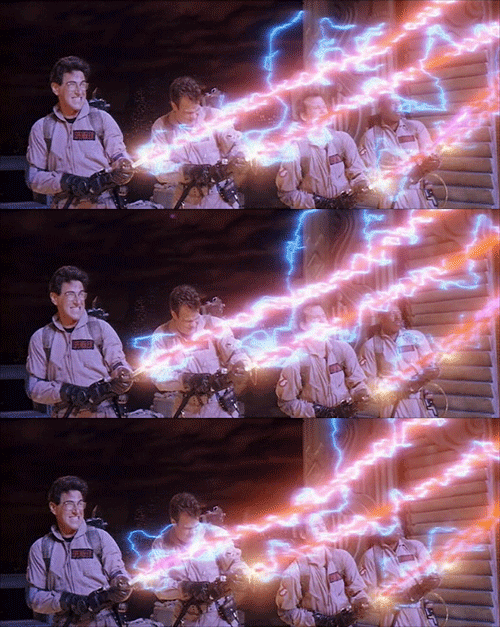
Ghostbusters - four guys with varying skillsets develop a unique hardware solution in order to improve city life. A distinct tag line helps them go viral.
2. Sheryl Sandberg's "lean in" culture
Working Girl - With "a head for business and a bod for sin", Tess discovers what she's capable of when she's "not afraid".
3. Crowd-funding
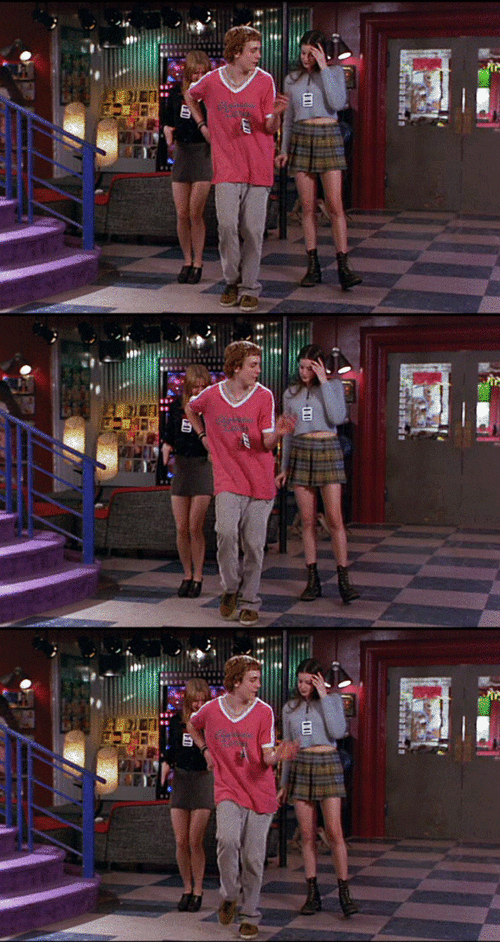
Empire Records - A group of music store employees offer perks of badges and booze to the general public in a bid to raise enough cash to "Damn the man" and "Save the Empire".
4. VC Funding
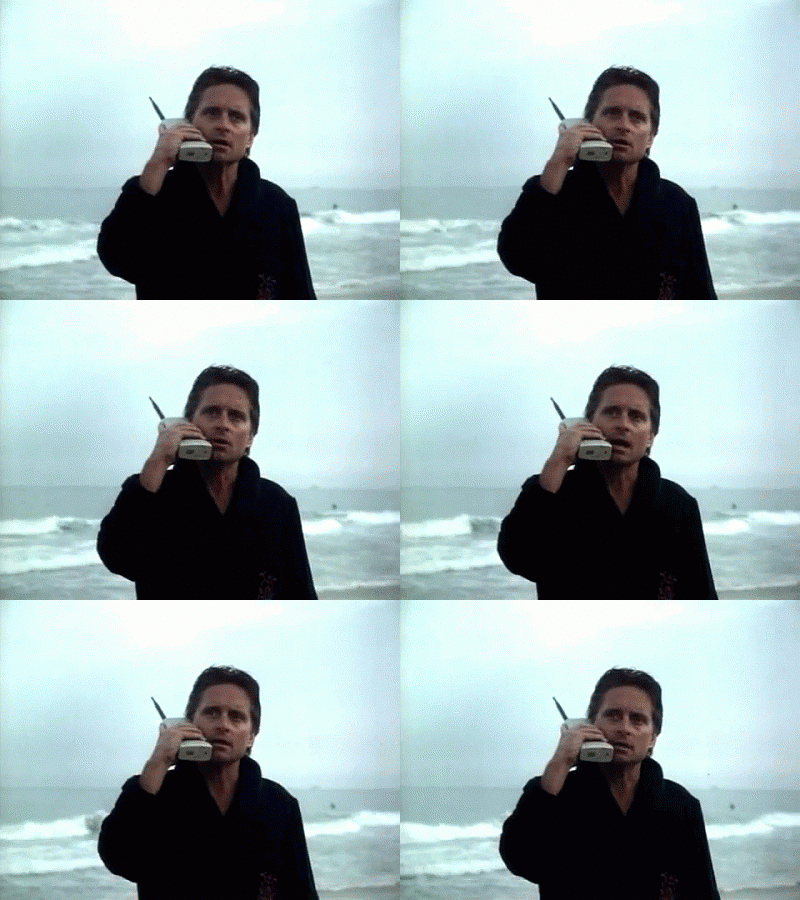
Wall Street - a bright young whipper snapper gets the investment he needs, but discovers only too late that the provision of lunch was not included in the small print.
5. Beta Testing
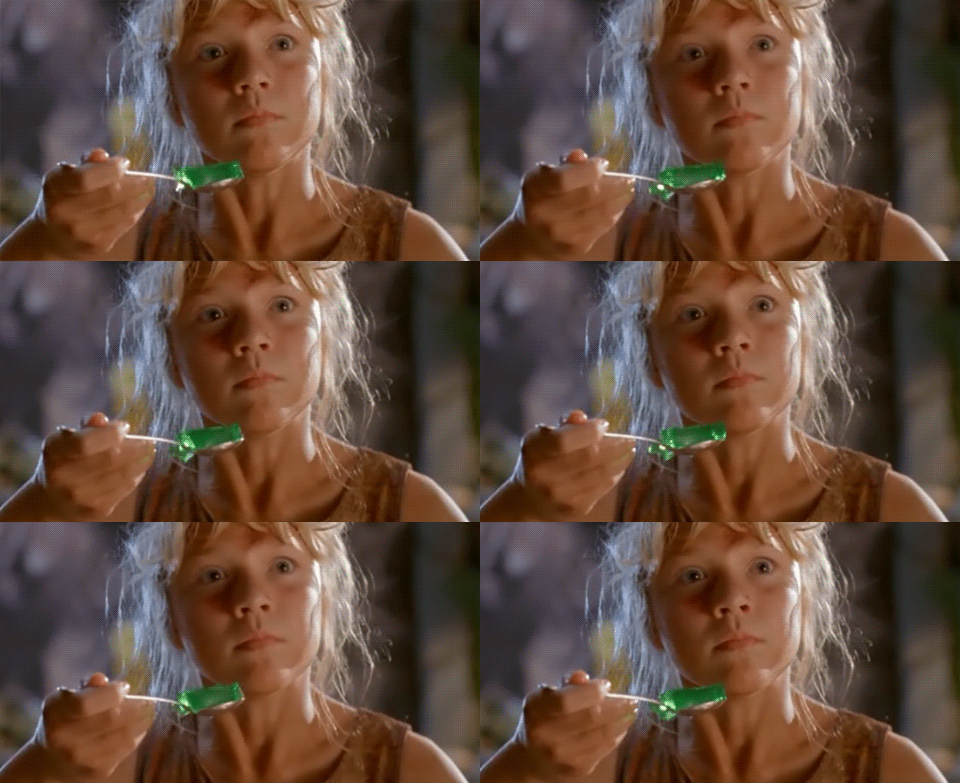
Jurassic Park - A potentially game-changing new experiential start-up selects a small group for Beta testing. They don't make it to SXSW
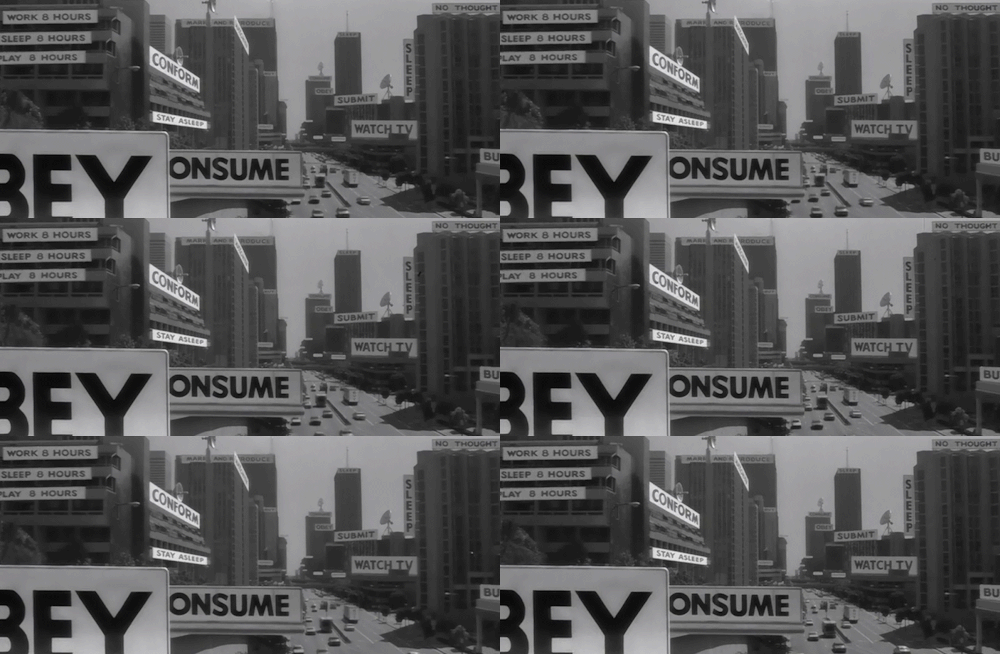
6. Google Glass
They Live - A drifter discovers that the ruling class are in fact aliens managing human social affairs through the use of a signal on top of the TV broadcast, concealing their appearance and subliminal messages in mass media. #ifihadglass
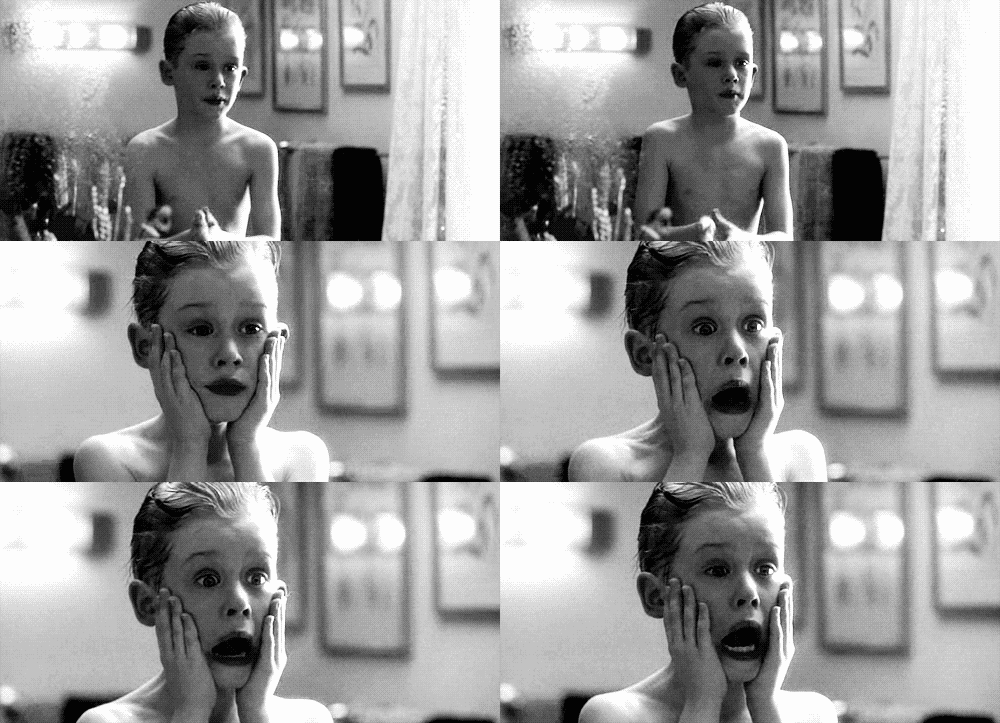
7. Rapid Prototyping
Home Alone - a child genius creates a self-inflicted bootcamp and uses iterative development techniques to innovate simple solutions to petty crime.
8. User Experience
Weird Science - two cyberneticists build a humanoid robot with a focus on user needs.
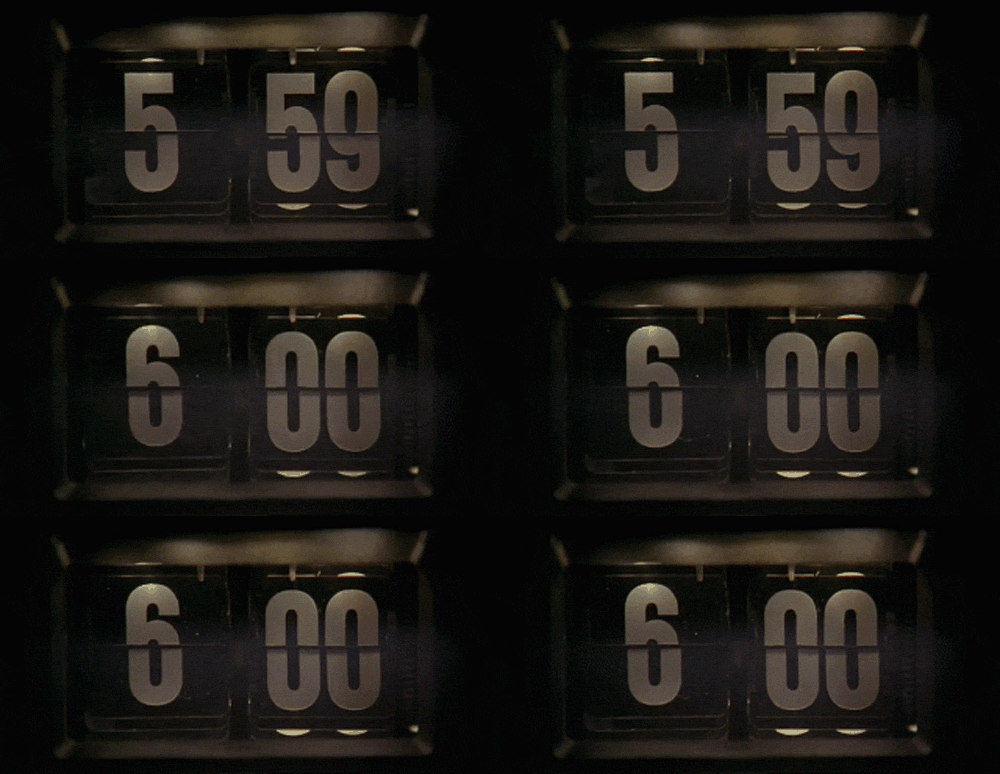
9. Quantified Self
Groundhog Day - By tracking himself over a length of time and assessing the data, Phil is able to improve relationships and lead a better lifestyle.
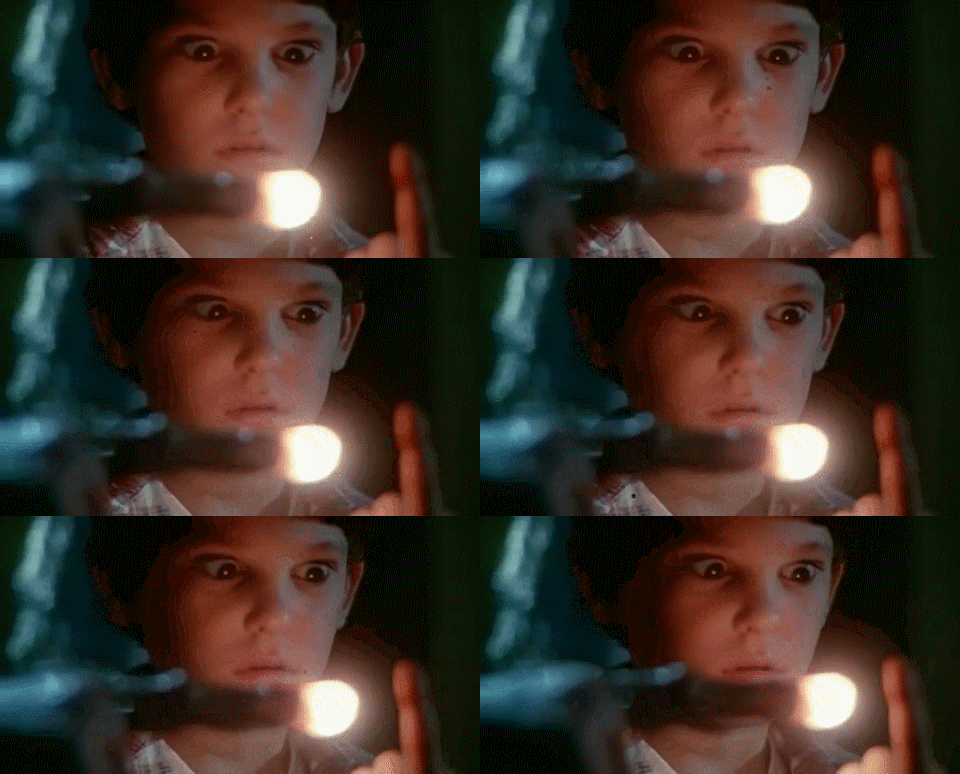
10. Aquihiring
ET - A foreign entrepreneur recruits an entire team of American specialists to help overcome serious logistical and communication issues.
My co-conspirator on Can't Understand New Technology says "f*ck desks". Steve argues that, within reason and with common sense, it is unnecessary to show up to the same desk, in the same office, in the same country every day. And to a certain extent, I agree. He makes a sound case. Here's the thing though -- I love desks. I don't want to fuck them, I want to take them out for an expensive dinner and treat 'em nice.
Marissa Mayer's recent call to end remote working may have been controversial yet I can understand the reasoning. A company's internal culture is a key, if not guiding, component of its brand. For Yahoo to rebuild itself in a post-Google world, the focus needs to be on bringing its people together, under one roof, at desks, in order to start figuring out what they add up to and where they're going. On December 31st 2012 I made several big decisions. I decided to quit my job, I decided to launch a newspaper, I decided to go to California, and I decided to stop caring quite so much and just enjoy life. But it was the offer of a desk - albeit on the other side of the world - which anchored me. The knowledge that I'd have a place to plug in - and people around to work alongside - gave me all the courage I needed to act on these huge decisions.
Yes, today's technology means we can work from anywhere, but camping out in a coffee shop is only as fun as your next bathroom break. Is there any greater sense of loneliness than having no-one to watch your MacBook while you pee? No. So, for the past month I have been at my desk in San Francisco's Presidio at Suiter Creative (working title). Some days I was there all day, some days I just did a couple of hours, but in four weeks I worked, I wrote, I helped friends and I starting ticking off some of those goals I set back in the new year. It's the best thing I've ever done.
While it's true that most of my professional relationships and "strategic breakthroughs" have not been forged at desks, a desk nevertheless symbolises being part of something, of belonging. Next week I get a new desk and a new place to belong. I first emailed Wolff Olins in 2007, about an hour after I learned the term "branding". It's been a long - and incredible - journey since that email and I wouldn't change it for anything. But, of all the desks I've had the pleasure to sit at, this is the one I've had my eye on for a while.
In the past week or so, I have embarked on a creative safari and visited three incredible studios. In Austin, Texas I stopped by the awesome Chaotic Moon and here, in San Francisco, I was lucky enough to visit Pixar and Madefire. These three studios could not be more different in terms of the work they produce, but they are alike in their dedication to their craft, attention to detail and their instinct for relentless innovation.
Chaotic Moon bills itself as a mobile studio and, with The Daily, Marvel and Disney on the sizzle reel, there is no denying their prowess in mobile experiences. However, as I discovered on an explosive tour by founder Whurley, this shop is making considerable steps towards world domination. The word ‘awesomeness’ is emblazoned in two-foot lettering across the largest wall in the main studio and yet it somehow feels like an understatement. Standing in midst of soldering irons, hacked Kinects, augmented reality paper, 3D printers, mind-controlled skateboards and a blender, Whurley talked at a thousand miles an hour about his ambitions for the company which has grown exponentially in just two years. With new, big-hitting partners onboard, and as they prepare to move into bigger offices up the road, the intention is to split Chaotic Moon into separate divisions in order to bring specific focus to gaming, software and - Whurley’s domain - labs. “Right now we’re like eighties Metallica”, explained Whurley, “we’ve not gone mainstream yet, but we’re smashing it underground”.
Madefire is close to my heart. Ben Wolstenholme, founder of Moving Brands where I worked for four years, took the decision to realise his vision for the future of storytelling early last year. Madefire is a comic book reader and creator tool which fundamentally disrupts the way people experience comics. I was part of the UK-based brand team behind Madefire, so it was fantastic to finally see the studio in real life. Incredibly detailed sketches lined the walls and, upstairs, some of the world’s best developers worked their magic. My visit came just days after their announcement of a strategic partnership with DeviantArt - a relationship which will expose a vast, global audience to the artistry and progressiveness within Madefire. Personally, it was fantastic to see Ben and his team just as their months of hard work and hustling began to pay off and I look forward to watching a dedicated fanbase build Madefire to superhero status.
Last but not least - Pixar. I am going to struggle to find words to accurately describe my experience within the walls of this prestigious studio. Awe-inspiring? Momentous? Life-changing even? Nothing is more thrilling than being part of a team who collaborate with and challenge each other in the quest for the best possible solution and to see how a diversity of talents and mind-sets can spawn a simple, beautiful output is specifically what makes me love what I do. At Pixar this spirit of game-changing group think was infused into the very fabric of the campus. It was evident in the ‘visitor’ sticker I was given at reception, it was there in the infamous artist huts behind the main hall, and it’s there in the animations loved by young and old around the world.
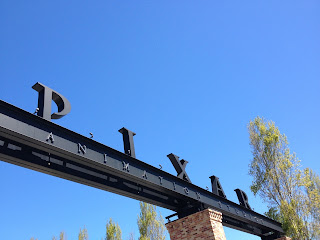
My host took me through Pixar's art gallery to show how a broad range of artistic styles and nuances inform what culminates in a distinctly "Pixar" visual language on-screen. He explained how a sketch will move from script to story to character to modelling to shading to sets and props to animation to simulation to lighting and, finally to rendering. "And that's just one frame!" - he said. Pixar, however, is not immune to the challenges of the moving world - like Chaotic Moon and Madefire too, their future lies in keeping a keen eye on the horizon. New audiences, new competitors and new technologies are all finding their way past security and sizing up the giant Luxo Jr on the concourse. Little have these external forces reckoned, however, to the legions of monsters, princesses, cars and toys awaiting them on the inside. At Pixar creative infinity is a given. It’s what lies beyond which remains unknown.
Thank you to Whurley, Ben and Andy for hosting me and taking the time to share their stories, ambitions and dreams with me.
It was 3am in San Francisco, I was hazy with jetlag and a cat had just vomited on my bed. Airbnb living may not always offer the sanitised, airtight luxury of a hotel room, but I'm prepared to put up with a spot of feline yaking in return for the overwhelming benefits it does offer.
Airbnb is still relatively new in the sense that most of us have heard of it, some of us use it, and all of our parents are convinced it can only end in rape, murder and the eventual sale of our organs on the black market. The level of trust, especially in a shared home, that is required between perfect strangers is not only unprecedented but also beautiful - in the hippy, liberal sense of the word. If you speak to anyone who regularly uses Airbnb, they will tell you that both hosts and guests are a self-selecting type; warm, open, post-Internet idealistic, and excited by the real life experiences that a well-thought out user experience can deliver.
Coming from England, where we're still feeling a bit too British to be spending intimate, quality time with people we met off the internet, it's inspiring to see that the Airbnb mentality and the "share economy" is alive and well in SF. Lyft transforms ordinary drivers into taxi cabs, or as they say "on-demand ride-sharing for cheaper safer rides". When my friend and I booked, our poor driver did not realise he was picking up two branding professionals who were rolling several margaritas deep and ready to chat. I even took notes.
To become a Lyft driver, you are comprehensively vetted - from driving tests to personality tests. Lyft know their success relies not just on trust between two parties, but also on the entire journey being good enough to disrupt the existing taxi cab market. To this end, we were also invited to charge our iPhones (chargers for both 4S and the 5 were onboard), to help ourselves to gum and even to fist bump our driver upon arrival at our destination.
Sweet ride
Our driver explained that Lyft is rapidly expanding into other US cities, but their prominence in SF is not merely down to a tech-savvy customer base. A less than ubiquitous bus system and a somewhat dodgy underground, means that SF has a unique transport issue - with around a million people trying to get around the city each day, taxis can become rare and highly sought after.
Lyft is a fascinating addition to the "share economy" roster and it's going to be interesting to watch how it - and others like it - change the way we view transport, just like Airbnb has transformed how we travel. Cat puke aside, obvs.
No lengthy write up here. I just really like the juxtaposition of these two films. Both very different, but both around the theme of "if you love them, let them go".
Today marks the launch of Can't Understand New Technology - an insider newspaper reporting on what Silicon Roundabout really
thinks about new technology. Twenty-five contributions from some of London's leading creatives and strategic thinkers weigh on how technology is affecting our industry and the way we all work, think and live.
Can't Understand New Technology references the now-infamous Shoreditch Twat and the satirical Private Eye - aiming to give a platform to the people who really can understand new technology: People who realise the true potential of technology within creativity and meaningful communications; People who are relentlessly pushing their clients, their colleagues and themselves to seamlessly integrate technology into their processes and thinking; People who can understand the absurdity of the new, and yet know it is merely the norm of the future. I - and my co-founder Steve Price - decided to use old technology to launch Can't Understand New Technology by creating a print-only publication with no online presence apart from that created by those who read it. You can follow their conversations by using the hashtag #cantunderstandnewtechnology across Twitter, Instagram and even Vine.
I look forward to seeing how Can't Understand New Technology is received, and reading the responses to the issues it raises. To be added to the distribution list for Issue 2, or if you'd like to speak to us about press, please contact me (@camillastore) or Steve (@planbstudio). Meantime, I'd like to shout out and thank all those who got involved and made Can't Understand New Technology a publication I am bursting with pride to launch. Anna Morley Chris Grant Dave Birss Ed Robinson Ellen Turnill Montoya Flo Heiss Glyn Britton Graham Wood Harry Woodrow James Denman Laura Jordan Bombach Marc Lewis Matthew Knight Panja Gobel Sam Ball Simon Manchipp Stephen Fulljames Steve Price Tom Kile Hartshorn Tony Hymes Tyler Finck Vicky Kochowski Paul West Asi Sharabi Anrick Bregman Can't Understand New Technology launches today - because who wouldn't enjoy a #cantunderstandnewtechnology in the post on V-day?
It may only be a few days old but Vine has become this week’s must-have, so hot-right-now app and brands should be taking note. A quick scoot around the Discover section showed up heaps of content tagged with - and about - brands. #Nike, #Burberry and #Starbucks already had quite a bit of user-generated content which, though small and inconsequential now, might have a larger impact on those brands in the long-term.
Though some brands were quick to jump on the latest bandwagon, it's the companies who take a moment to assess and define their role on the platform - and the people they want to connect with - that will ultimately strengthen their brands. These platforms take time to develop their own communities, vernacular and even eccentricities. For the time being, brands should just sit quietly and watch.
Regardless of whether Vine is the Instagram of videos/ the YouTube killer/ the Piction of Twitter/ the Path of 2013... it remains indisputable that short-form moving content is here to stay. Are the filmmakers amongst us soon to be getting briefs for 6 second brand films and branded content? Will I be writing guidelines for creating micro-trailers for ads? It’s a compelling thought and one which the world’s most talked about brands would do well to prepare for now.
Yesterday Microsoft launched a new campaign around their update to Internet Explorer, with a video entitled “Child of the 90’s”. The slightly micro-soft-touch video aimed to tug at our Gen Y heartstrings with memories of pogs, tamagotchi’s, slap bands and - you guessed it - “the browser you loved to hate”. To use a term coined by The Future Laboratory, “netstalgia” is in full force, as me and my contemporaries begin to fondly remember the good old days of dial-up broadband and phones the size of a Fiat Punto. For the perhaps the first time, it’s now possible to market web-based services with the rose-tint of nostalgia, rather than the blinding glint of innovation.
On a similar, if somewhat, tangential note, I’ve been thinking a lot lately about the internet on film. Whether it’s about retrospective storytelling (The Social Network, Jobs) or the web as a narrative device (HBO’s Girls will be my primary reference for this), filmmakers are facing an increasingly challenge of making screens, code and online activity as visually exciting as the real world action taking place in the story.
I am loathe to give Lena Dunham any more column inches, but her integration of the Internet within the plot and lives of her characters marks a watershed moment for film and TV. We can no longer pretend that online interactions aren’t contributing to the momentum of a contemporary storyline. I’m not talking “You’ve Got Mail”, where an occasional screen-shot of an email revealed the characters’ burgeoning relationship. Technology has made human interaction complex - a broad range of subtle cues from across a range of platforms now impact the trajectory of our lives. But if people looking at screens is boring, do we have to invent a new cinematic style to literally show the deep subtext taking place in the virtual world? For some reason, I keep returning to this video.
It’s gaudy, it’s over the top, and it’s French.... but it kind of works. I may be part of a generation that gets “netstalgic” for when life took place on just a few platforms, when the protagonists we watched on TV had only to wait by the just one phone for her life to change. But, to the generations behind me, this kind of overt meta data, is an intrinsic part of their world view. And film and TV need to reflect that if they are going to continue to tell rich, meaningful stories about characters we believe in, love and remember forever.
Question: What is the line between awesome, personalised customer service and creepy, invasive behaviour from a brand?
Ok, so here’s what happened. A few days ago I stopped by the Rag + Bone store. Whilst there I tried on about five items and bought one. Claudine (name changed), the sales assistant, was friendly and helpful. Absolutely nothing about her approach or our interaction was out of the ordinary. At the till, she asked for my email address and - assuming I would be subscribed to the R+B newsletter - I gave it to her. Happy days.
Yesterday I got an email from Claudine. This is what it said,
Hi Camilla,
I hope you had a lovely Christmas, I remember you bought the skirt, I was just wondering if you had a chance to wear it already?
Have you got any plan for New year? If you need anything else, let me know, I'll be happy to serve you again. If I don't see you before, Happy New Year. xx
Now... is that weird? I really can’t decide. In my previous post I was strongly lamenting the lack of a tailored, personal, engaged conversation with a brand. Yet now I’ve been invited into one I feel a bit... off about it. Is this how Rag + Bone care for their customers? In which case, that’s a lot of effort for someone who bought a single sale item. Or has our Claudine accessed my personal details in order to make friends or even hit on me? I can’t work it out.
Either way, it comes across as customer service design and brand guidelines gone awry - like a collquialism put through Google Translate. Rag + Bone, if you’re reading, you might want to get a handle on this so I, and perhaps others, can enjoy their new clothes without the shadow of poor grammar and strange undertones. Meantime, I think I'll stick to sale shopping online!
This is a long read, but there's quite a bit I want to cover. So please bear with me. I’m going to try and break it down, because this is important and I am keen to get feedback. Last week I had a run in with Virgin Media. But that’s not what this post is about, so read on. Despite going to hell and back trying to rectify the situation, what emerged - phoenix like - from the burning embers of my belief in the Virgin brand, was a light bulb moment with regards to the future of brand strategy. In short, my belief if this: We, the branding industry, are ultimately failing our clients by omitting to tie their brand strategy to their data strategy
Business strategy + brand strategy = proof of process Good brand strategy is intrinsically linked to a client’s business objectives. They’re generally what drives the brief in the first place, and they act as one of the few measurable proof points for what branding can achieve. This approach still stands. It is important to note, however, that increasingly those business objectives have come to include terms like “user engagement” and “digital leaders in our industry”.
The new brand strategy In the past few years, what a brand is, what it stands for, how it is accessed and how it is expected to behave have fundamentally changed. With the rise and rise of social media and technology in general, the number of brand touchpoints has grown limitless. A brand now needs to be consistently recognisable, whether it’s on the homepage of their website or on their regionalised Instagram feed.
In response, agencies have had to learn how to bring in people with new skillsets, usually with the word “digital” in front of their title. For some companies, this has meant recruiting, for others it’s meant buying/merging with digital agencies. As a result, agency offerings now include things like UX/UI, bespoke app creation and social media guidelines. This is a good thing.
Brand strategy - Data strategy = unhappy customers Unfortunately, as we’ve become experts in “thinking outside the box” and “pushing boundaries”, and got busy making all the assets that go along with it, we’ve forgotten one crucial thing. We forgot to explain to our clients what to do with all the data these digital touchpoints create. Yes, we may have told them how valuable the data is, and what amazing insights it can give them. But we’re not really helping them go beyond that. It’s like we’ve delivered the big screen tv, and have left them to sort out the wiring. This needs to change fast.
Case study: Virgin Media Virgin - one of the world’s largest and best known brands. I trust them. I was more than happy to go with them for my broadband. When I hit a problem, however, it quickly became apparent that their social media team was entirely silo-ed from their customer service team who - in turn - were silo-ed from their technicians on the ground. My conversations with Virgin Media on Twitter were not reflected in my conversations with them on the phone. Meaning, that while they had the Twitter account, and the tone of voice guidelines, and the staff, they were unable to identify me as a customer and pass my concerns on to someone who could actually help. Their information flow was failing to match consumer expectations, or to put it another way, they had the TV and had not plugged it in. Lots of information = big data The experience I had with Virgin Media was mainly due to one piece of information failing to be passed through to the correct channels. But my issue can’t possibly have been unique to me, Virgin Media must deal with thousands of similar issues on a daily basis. And lots of similar information is known as “data”. If a company as big as Virgin have a data disconnect that's this visible and this damaging to their brand, what others do they have hiding beneath the surface? If they’re not looking at their data, and mixing it up with other data from other departments like, for example, their technical team, then they are running an inefficient business. Business, brand, data - it all works together.
The Solution 1. As brands increasingly express themselves and come to life through technology, so they generate vast amounts of real-time qualitative and quantitative data that is valuable to every part of the business. 2. The branding industry need to work with data scientists if they are to offer the most impactful digital solutions for their clients. The two skill sets can no longer thrive in isolation. 3. It is the responsibility of the branding industry to clearly identify what data each of their recommended touchpoints creates, and how that data should be gathered, managed, processed, interpreted and acted upon by the entire organisation. 4. Moving forward, a data strategy should act as the glue between the business objectives and the brand strategy.
So there we have it. Thoughts? Is it possible? Is it crazy? Or might it just be the future? Let me know.